
By Lisa Williams
A new report from Climate Analytics finds that tripling renewables, doubling energy efficiency and cutting methane by 2030 and beyond would cut the warming rate by a third in ten years, and halve it by 2040. It would significantly cut projected warming this century, from 2.6˚C to 1.7˚C.
The analysis shows the three key near-term actions would bring projected warming below 2 degrees. the report focused on the G20 nations, finding that tripling renewables, doubling energy efficiency and cutting methane by 2030 and beyond would cut the warming rate by a third in ten years, and halve it by 2040.
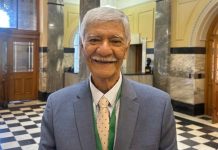
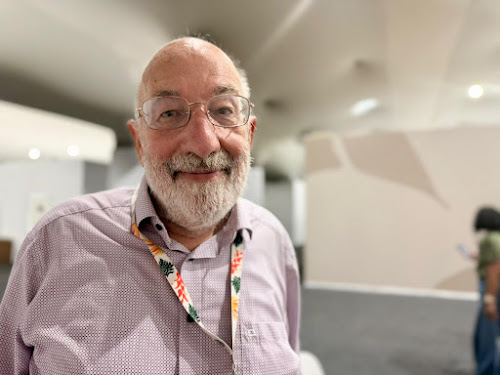
Implementing the tripling and doubling goals of the COP28 Global Stocktake (GST) would be the first critical step in the GST agreement to transition away from fossil fuels in energy systems. It would significantly cut projected warming this century (about 0.9˚C – from 2.6˚C to 1.7˚C). Early reaction from some G20 nations here at COP30 is that they need more time to digest the findings — TPLnews sat with Climate Analytics CEO Bill Hare, in Belem.
TPL: Well, let’s talk about the report — What are the key findings from it, and how did Climate Analytica put it together?
BH: One thing we need to know is that the current policies of countries, taken together, would warm the world by 2.6 degrees. It’s a huge level of warming. It is an improvement of one degree from when we adopted the Paris Agreement, it was 3.6 then 2.6 but a long way from 1.5 degrees, right? So we asked ourselves the question, what if countries implemented the three big things that they agreed to in the first global stock take in 2023? The three big things were tripling renewables, doubling efficiency, and cutting methane emissions. So we added all that up and went through the G20 countries in detail, and came up with some astonishing results, I think.
Firstly, the urgent emission reductions that will come from that would halve the emission gap in 2030. Gap between where policy is ahead of 1.5 degree pathway–very important in the climate front. By the late 2030s that would slow the rate of warming by about half. Long term, beyond the 2030s it would bring total warming down by 0.9 degrees. That means we will go from 2.6 degrees warming down to around 1.7 degrees, still several tenths of a degree away from 1.5 degrees, but a massive improvement on where we’re headed now. The catch is that these were heavily negotiated by countries, they were hard fought over, negotiated and agreed. They haven’t been implemented yet. By and large, the renewable target tripling renewables is getting there. It’s about 2.6 times now, but energy efficiency has gone backwards. Methane emissions are still going up. So if countries just implemented what they had agreed, then we could really begin to crack this climate change problem. That’s the point of the study.
TPL: Does it matter which countries in particular?
BH: It does. And actually, the study looks at the G20, and we have unpacked each of the G20 countries. So yeah, it does matter. Each country plays its own role in tripling renewables. Some countries are already a long way down the road, so they don’t have to go as high. Others at a low starting point have to go higher. It’s the same with efficiency. We all have to reduce methane. So yes, it does matter, and the study does show which countries need to do what. We’ve unpacked that. So it’s a bottom up analysis that has these findings in it. The big political challenge now is whether countries can here, agree politically, to implement what they have negotiated. The big mantra at this COP, from President Lula downwards is that we have to move from negotiation to implementation. Well, here are three things that were negotiated. They make a really, really big difference, so implementing them would be the right thing to do. We will be taking the science of the problem seriously. We’re headed towards an overshoot of 1.5 degrees. Unless we get emissions down, we’re going to see massive sea level rise. So for example, from the Pacific point of view, recent scientific work has shown that the difference between 2.6 degrees of warming this century and 1.5 is over 65 cm of sea level rise in the next few hundred years in the Pacific. So there’s a very big cost to not doing anything now, and it’s going to sink islands like Kiribati, Tuvalu, the Marshall Islands, and will cause serious damage around the Cook Islands for example. Any low lying area in the Pacific is going to seriously suffer from us not doing this. That’s one of the big things.
TPL: As you’ve said, it comes down to the politicians.
BH: It comes down to governments and the politicians. That’s right, and that’s why, that’s why ministers are here, they’re gathering here this week, in this COP to make political decisions. To take the responsibility they as ministers, on behalf of their governments have, to protect the world from dangerous climate change. That’s the whole point, not to come and have lots of nice meetings, but to actually do something that really matters, that will make a difference and reduce the risks and damages that will otherwise come upon all of our peoples and all of our countries.
TPL: But how do you shift the politicians from their national interest to the interests of humanity?
BH: Look, let’s be really frank about it. The real problems here are driven by the fossil fuel industry. So a lot of the countries here, majority, I think, would benefit from less fossil fuel use. The fossil fuel exporters, Saudi Arabia, Emirates, Australia and others Canada– they are the ones that probably don’t want this action taken. They might not say that out loud. They might hide behind other fossil fuel exporters. But in general, they’re the ones that don’t want to see a specific call to do these three big things–triple renewables, double efficiency, reduce methane. That’s it. Will other countries and their ministers stand up to that? And it has to be a compelling case. The International Energy Agency showed last week in its New Energy Outlook, which has a new net zero pathway and very important calculations of just how much money would be saved by consumers from getting into high renewable high electrification world, getting emissions down towards 1.5 degrees. This would save money. Living costs will be lower. Electricity costs will be lower. That’s the cheapest option we have. High fossil fuels means higher living costs, higher economic damages, higher electricity bills for people. Now what this translates into is not abstract. A lot of countries are now having enough climate damages happening that an increasing number of people are unable to insure their houses. You can’t insure your house, and can’t get a mortgage. That’s a bigger and bigger problem that’s going to get worse and worse unless we bring the warming rate down and get back from peak levels below 1.5 degrees. We know that. So there’s a real economic cost, and real damages to the way we’re headed. And I think the issue is, will the ministers here bite the bullet and push back against the fossil fuel interests–who are in the negotiating rooms around here, by the way–and do the right thing, and move it forward? That’s the challenge here. It’s always a challenge at COPs right? But we did it once before, in 2023 we got all these energy measures agreed. We got the transition away from fossil fuels agreed, right? It just needs to be done now, implemented at this COP.
TPL: At this COP, we’re still hearing the same pushback against science. We’ve now got Brazil endorsing that initiative for information integrity. How much is that going to help to throw some more balance back for the scientists in favour of science?
BH: It’s a good question, but in the end, it comes down to whether government is prepared to act on the science. It’s one thing to have nice information about the science. It’s one thing to say we accept the science, but the real acid test is what governments do. Do they act on the science? For 30 years now or more we’ve been coming to these COPs, and fossil fuel interests, fossil fuel dependent countries have been pushing back and challenging science, sometimes bluntly, sometimes subtly, but all the way that game has gone on. What we have now is worse in the sense that we have massive disinformation on science going on. I think that is what everyone is talking about in this space, absolutely massive disinformation through all sorts of communication channels, social media, whatever, challenging, undermining, obscuring, confusing. That’s the challenge. But governments have enough scientific advice to be able to see through that. They don’t have to be bamboozled by it. They don’t have to be confused by it. The science is so clear now, and the scientific community has been here in force. There’s been scientific event after scientific event. I just wish the ministers could have been in each one, because they would be yelling for action. They will be kicking the fossil fuel countries out of meeting groups, saying, “this is too much. We have to do it now.”
TPL: Are we moving toward that anyway? Could this be the last COP where you have fossil fuel interests represented or misrepresenting as parties and those who are here to achieve 1.5?
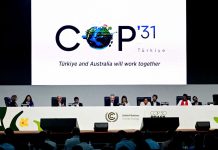
BH: I wish one could say that. But the world is complicated. Governments will put in their delegations who they want, and the UN has to accept that. So maybe government’s are getting embarrassed into reducing the fossil fuel contingent, or maybe not. But I would hope it’s the last COP where we have to have this fight again. It will be just fantastic if we came to COP31–maybe we’ll be in Australia– to actually discuss just how fast we’ve gone on renewables, just how much we’ve made out of electrification, just how well we’ve done in reducing methane. Then we’d have a real implementation-COP discussion, we could say, Okay, let’s stop discussing whether we do it. Let’s discuss just how much money we need and where. That’s the other thing here, there’s a high level expert group on climate finance. They’ve got their 4th report out now, it’s pretty heavy-duty reading, but the main message is, there’s enough money out there, there is enough capital out there in the world to actually make all the investments, by the way, not just for mitigation, also for adaptation, resilience and loss and damage. So one of the big points they make is, yes, two thirds of the capital needed will be in mitigation, for energy, but the rest is needed for resilient infrastructure, for adaptation, technologies, for infrastructure that is resilient to the climate changes that are happening. So that means building roads, airports, everything.
TPL: We’ve got a COP Presidency looking to have a draft text out by tomorrow. Is that realistic, a swing swing away from leaving a text til the last day–Is it going to be enough to get everyone where they need to be (for consensus)?
BH: It’s a very professional approach. We might not have seen that in the last few years but previous COP Presidencies have done that. You get a good text out mid week Wednesday and you get a good basis for finishing the meeting well. If you leave it to the end you get complete chaos. This is how this works. I think it’s a very professional approach. They’ve heard all the views, there’s now meetings going on to try and work out what’s in, what’s not, what the options are. I think that’s a very good thing and sets it up for a very good conclusion to this meeting. It’s going to be very very difficult to get a good conclusion to this meeting. You can’t gloss over it. The resistance to the right things happening at this COP is really really extreme from a small number of countries. Will they be embarrassed into moving, we’ll see in the next days. I think so far the Brazilians have handled this really well, so one can be optimistic about the process but still be concerned that its going to be very tough to get a good outcome here.
TPL: What particular countries does the Pacific and the rest of the world really need to be (talking with) saying, ‘Hey, you’ve got this. How can we help you?’
BH: I think the Pacific has done a good job in highlighting the importance of 1,5 degrees. It’s been a leader on pushing that level of action for years and years. I think Pacific ministers are frustrated at the lack of progress, probably angry –they don’t show it out, but I suspect I know a few are angry as well. So they’ve done a pretty good job of pushing it, and I think they’re working hard now and over the next day. So there’s a long way to go at this COP. It’s only Tuesday, three days to go, maybe four. So in terms of the politics of the COP, it’s too early to comment on an outcome right now.
TPL: You said maybe four, but the COP President has promised that it will be over on Friday.
BH: He’s done that but the logistical note says otherwise. They have planned for the facilities through to Sunday morning. So let us see. I do hope that it closes on Friday. I do.
TPL: Was there anything in your report that surprised you where you went ‘wow! didn’t know that?’
BH: We expected a big warming reduction. We didn’t expect as big a one as we got. So that surprised us, so that meant that we needed to do more work, to ask ourselves ‘are these numbers crazy? Is it really the fact that you could get a 0.9 degree reduction, that you could half the warming rate by the late 2030’s?’ So we did a lot more work to analyse that. We looked at others who made similar calculations. For example, the International Energy Agency also tried to work out what emission reductions you get from tripling renewables, doubling efficiencies and methane and we worked out, with other calculations as well — and we were in the same ballpark. So we figured, okay, this is probably a solid guess. As you can imagine, there are uncertainties in going from emissions in 2030-2035 to then, what happens for the rest of the century? This has been a method that’s been developed from the scientific community. We were the first to develop one emission Gap Report uses others …groups. So we need to look at what other scenarios are showing post 2035, and find where those emissions fit. That’s how we do it, in rough terms, and this is where we get to. So we tested all of the uncertainties there, and if the world starts to move in this direction, for 2030 and 2035, that momentum will continue. Why? Because you would have invested so much in renewables and electrification, by the 2030s they will make no sense to turn the clock back. It’s cheaper, it’s faster, more profitable. So that momentum will continue.
TPL: People watching this from their homes, at home in the islands, will be thinking, but I still want to go out and buy that new four-wheel drive. I still got to get that truck. Should they just be kind of adopting that behaviour change mindset? How do they make the switch?
BH: Good question. Everyone has that problem now deciding what to do, to replace the car? What is true is that we are seeing more and more affordable electric vehicles come online. We’re even seeing 4WD drive vehicles, Utes and so on, which I know other people use, and these are becoming fully electric. So I think that’s out there. Would it be affordable? That’s a big thing. And I think without special provisions, without special permissions, like financing arrangements and so on, for small countries that always expensive to import. So there will need to be some public policy measures that help that, and also that would then need to be coupled with rooftop solar panels, all that kind of stuff.