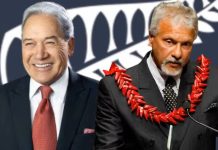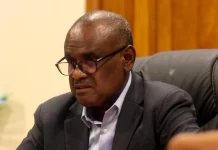

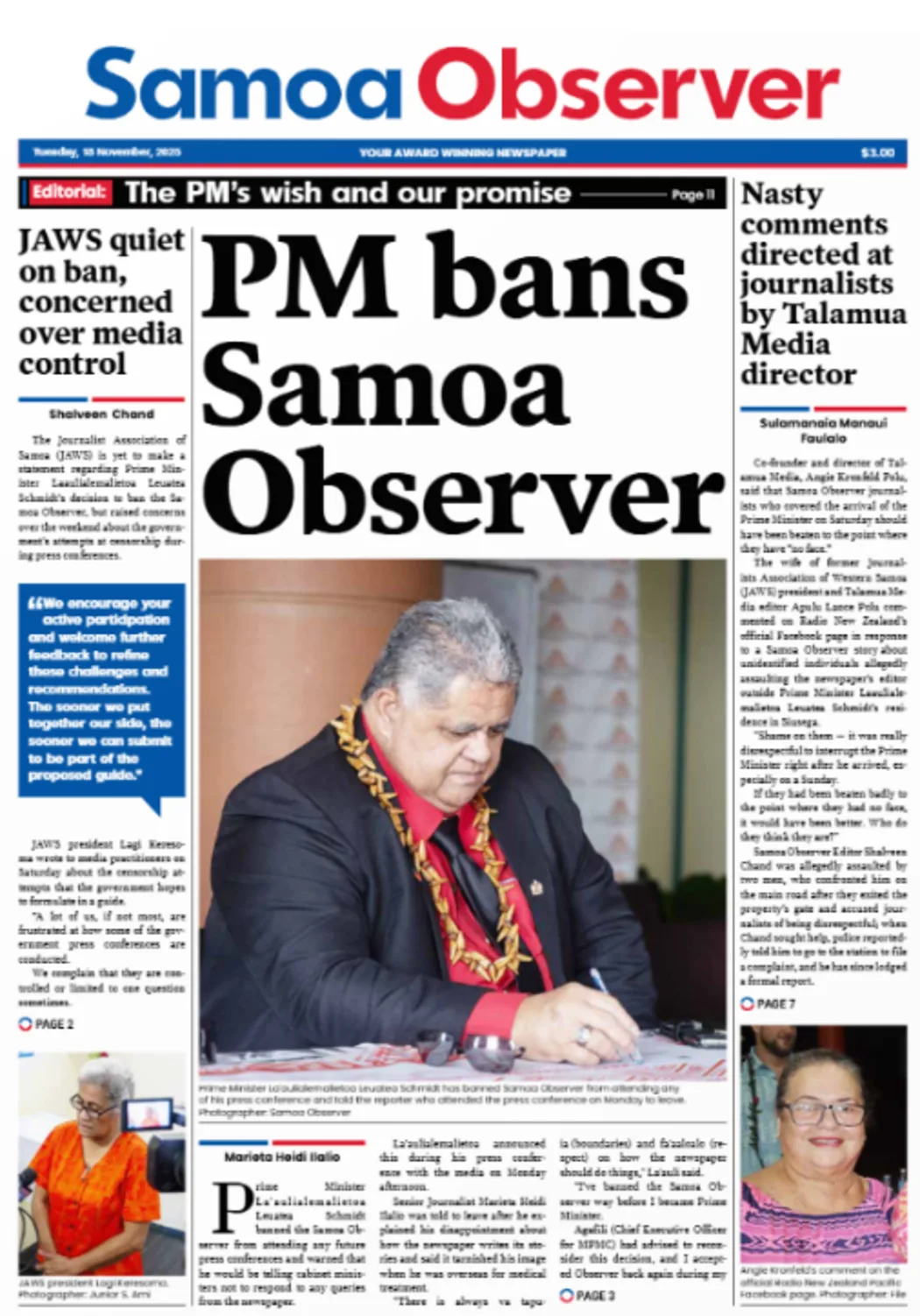
The Journalism Students’ Association (JSA) at the University of the South Pacific has issued a sharp warning over what it calls an escalating attack on media freedom in Samoa, condemning Prime Minister La’aulialemalietoa Leuatea Schmidt’s decision to ban the Samoa Observer from his press conferences.
In a statement, the JSA said the suspension is “not merely a rebuke of one newspaper, but a more deliberate and systemic attempt to restrict robust public scrutiny.”
“It raises serious concerns about citizens’ right to information, as well as the erosion of transparency, accountability, and public trust,” the statement said.
The students also expressed alarm at remarks by the Journalists Association of Samoa (JAWS) executive, who publicly wished that the Samoa Observer editor’s face had been disfigured during an assault.
Equally troubling, the JSA said, were reports of physical confrontations involving journalists outside the Prime Minister’s residence.
“This is an alarming trend and signals a reverse, if not decline in media rights and freedom of speech, unless it is dealt with immediately,” the group said.
The JSA argued that targeting the Samoa Observer strikes at the core of democratic oversight.
“With its long-standing dedication to reporting on governance, human rights, and social accountability issues, the ban on the Samoa Observer strikes at the heart of public discourse and places journalists in a precarious position. It risks undermining their ability to report freely and without the fear of reprisal.”
The group said the situation in Samoa is part of a broader pattern of pressure on journalists, noting the defamation charges laid earlier this year against JAWS president Lagi Keresoma and Samoa’s “steep decline in the 2025 World Press Freedom Index.”
They also pointed to JAWS’ recent statement on the government’s attempts to control press conferences through a proposed guide, calling it further evidence of tightening restraints.
“These recent incidents, coupled with the exclusion of the Samoa Observer, send a chilling warning to Samoan journalists and establish a dangerous precedent for media subservience at the highest levels,” the JSA said.
The association stressed that journalists must be allowed to work safely.
“Journalists must be able to perform their work safely, without intimidation or assault, as they carry out their responsibilities to the public. These incidents raise serious questions about the treatment of media professionals and respect for journalistic work.”
JSA President Riya Bhagwan and Regional Representative Jean–Marc ’Ake said the situation threatens the future of journalism in the Pacific.
“The JSA is especially concerned that these attacks are eroding youth confidence in the profession,” they said. “We believe strongly in defending a space where young people can enter a field that is critical to democratic accountability, public oversight, and civic engagement.”