
World leaders and delegates attending the ongoing 30th Conference of the Parties to the UN Framework Convention on Climate Change (UNFCCC), dubbed by the Brazilian Presidency as the ‘COP of truth,’ must act with urgency and solidarity.
They must also be honest with themselves about the actions required to ensure a safe and prosperous future for us all.
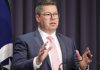
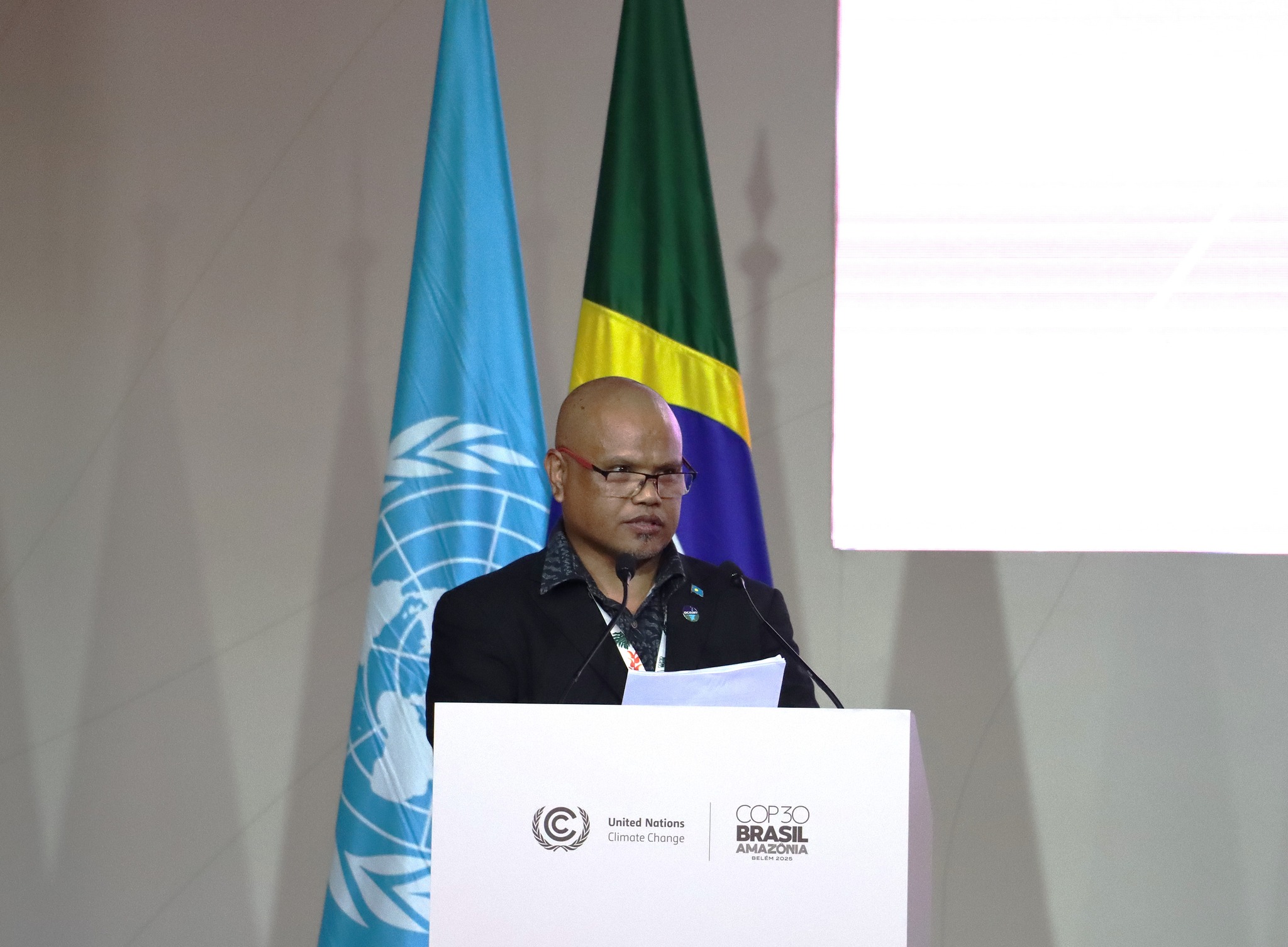
“The latest science is clear. We are dangerously off track to limiting global warming to 1.5°C,” said Steven Victor, Palau Minister of Agriculture, Fisheries and Environment.
“Our collective response has not yet matched the scale and urgency of this crisis, worsening impacts across the planet.”
Speaking on behalf of Pacific Islands, Caribbean, African, Indian and South China Seas States, who are members of the Alliance of Small Island States (AOSIS) during the High-Level Segment of COP30 as AOSIS Chair, Victor said his thoughts were with the people of Jamaica, and the wider Caribbean, whose lives have been devastated by Hurricane Melissa.
In Cuba, more than 54,000 people remain displaced, including 7,500 staying in official shelters, according to the UN relief coordination office, OCHA. In Jamaica, access to isolated communities remains precarious after the hurricane destroyed their communities. In Haiti, Hurricane Melissa claimed more than 40 lives.
“These increasingly intense extreme weather events are becoming more common. We know that thoughts will not save us. This is why, for small island developing states, 1.5°C is not a political slogan. It is a non-negotiable survival threshold for our people, our cultures, and our livelihoods,” said Minister Victor.
At COP30, which is now into its second week, thirty-nine small island and low-lying nations who are part of AOSIS, are actively engaged, offering solutions. One of them is a proposal for a robust response plan to the Nationally Determined Contributions (NDCs) synthesis reports, setting out a clear plan of action to get the world on track for 1.5°C.
“Our goal is not to finger point or undermine the Paris Agreement policy cycle. Instead, it is to have us work together with trust to close the ambition gap to 1.5°C, which the International Court of Justice Advisory Opinion affirmed as the legal benchmark and scientifically based consensus target under the Paris Agreement,” the AOSIS Chair said.
Adaptation is an ever-increasing priority for AOSIS, Minister Victor pointed out.
At COP30, parties are mandated to conclude the UAE Belém work programme on indicators.
“We recognise the complexity of this task, given that further work is needed to refine those indicators that are not still complete,” said Victor.
“Our view is that the Subsidiary Bodies can continue this work towards a set of credible, balanced and workable set of indicators for the Global Goal on Adaptation. These indicators must be voluntary and non-punitive and must not become new conditionalities for accessing finance.”
For small islands, climate action is only possible if it is underpinned by credible and accessible finance, the development and transfer of appropriate technologies, and capacity building for developing countries, the High-Level Segment audience was told.
“COP30 must rebuild trust that commitments will be met and support delivered,” said Minister Victor.
“Public finance remains vital and this is why we join other developing countries in a call to operationalise Article 9.1.
“We must also see at least tripling annual outflows from our climate funds, including the Green Climate Fund, the Fund for Responding to Loss and Damage, the Adaptation Fund, and the Global Environment Facility. This will require that these funds are sufficiently capitalised and replenished.”

The adaptation financing gap continues to grow, AOSIS pointed out. The recent UNEP Gap Report found that developing countries will spend US$350 billion a year to adapt to climate change by 2035.
“To address this gap, we join other developing countries in calling for an at least tripling of adaptation finance to 120 billion by 2030.”
At COP29, parties agreed to the New Collective Quantified Goal (NCQG) on climate finance. A year later in Belem, a number of them have said they want to talk about the NCQG and its implementation.
“Yet in the relevant agenda item on article 9.5, where developed countries have agreed to elaborate their actual roadmaps on climate finance, we have seen deliberate attempts to stop any and all progress,” Minister Victor pointed out.
“It is crucial that we update the terms of reference of biennial communications of developed countries to reflect elements of the NCQG, including the necessary disaggregation of data to provide the needed transparency on climate finance and to rebuild trust. We urge Parties to act in good faith with the decisions they have previously agreed to and to not block progress.”
On the role of gender and social inclusion in addressing climate change impacts, AOSIS reminds that these impacts are not gender-neutral.
“We must adopt a well-resourced and implementable Gender Action Plan that pushes us towards gender equality with zero tolerance for regression.”
The High-Level Segment of COP 30/CMP 20/CMA 7 is held on Monday and Tuesday. The opening featured the President of COP30, André Aranha Corrêa do Lago, UNFCCC Executive Secretary, Simon Stiell, President of the UN General Assembly, Annalena Baerbock, and Vice President of the Federative Republic of Brazil, Geraldo Alckmin.
On the global stage of COP30, Minister Victor said AOSIS is in Belem with a genuine desire to build trust to deliver on our climate commitments.
“We urge all Parties, under the capable guidance of the Presidency, to act with the urgency and solidarity this moment demands. For us, this is not just about ambition, it is about taking the actions required to ensure a safe and prosperous future for us all,” he concluded.