By Sera Tikotikovatu- Sefeti
While the world learned early on that Ethiopia will host COP32, the question of who will host COP31 remains unresolved after a week of talks here.
Australia continues to receive overwhelming support to host COP31 in partnership with the Pacific, yet Türkiye remains what several delegates have described as an immovable stone wall.
In response to questions from Islands Business, Australia reaffirmed that it remained “resolutely committed” to the bid.
“Our bid enjoys overwhelming support within the UN regional group responsible for the decision Western European and others Group (WEOG) and has strong backing from Pacific leaders,” was the written response from Australia’s Climate Change Ministry.
But they recognised Turkiye’s tactics.
“Türkiye is a determined and formidable competitor which also wants to host COP31. There is no forcing mechanism such as a vote.”
Australia insists it is committed to finding a resolution — and to bringing a COP to the Pacific for the first time.
Minister for Climate Change and Energy Chris Bowen echoed this sentiment in comments originally made to Michelle Grattan on the Conversation Politics Podcast, explaining that WEOG consists of 28 countries and that “they already have the support of 23 of the countries.”
“And no country has said we are not supporting you apart from Türkiye, there is only 23 who have shook my hand, looked me in the eye and said they are voting for us, but there is no agreed time or process for a ballot,” he adds.
Bowen described a process that is meant to operate on tradition and trust, “It is meant to work on a consensus, sort of an old world, sort of gentlemanly sort of approach to say whoever loses will withdraw. That’s not the way it’s panning out and I have had multiple meetings with my Turkish counterpart, including in Ankara, to try and find a way to maybe a sort of win-win solution. We haven’t been able to find that yet.”
Across the Pacific, the message this week has been clear: if Australia wins, it must be a Pacific COP in substance, not just branding. Delegates have not shied away from the reality that Australia still has a long way to go in earning that trust, particularly as one of the world’s largest fossil fuel exporters.
Fenton Lutunatabua of 350.org Pacific Team put it bluntly: “We need a COP in the Pacific not to focus on Pacific priorities, but to lift the UN climate talks to the standard of Pacific climate leadership, ten years from Paris the Agreement we are dangerously off track for 1.5 degrees.”
He added that the Pacific’s calls for action were often labelled unrealistic.
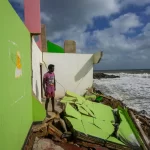
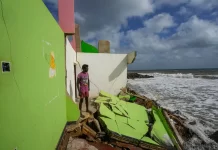
“Come to our homes, see the devastation, and then tell us that we don’t need the highest level of action possible,” Lutunatabua said.
On Australia’s bid, he said: “Australia has a lot to live up to if the COP31 bid is successful, this would be their opportunity to put rhetoric into action and phase out fossil fuels, domestic and exported once and for all.”
Asked about their energy trajectory, Australia pointed to its 2050 net-zero pathway — three system-wide shifts:
• Use energy more efficiently
• Electrify and fuel-switch
• Scale clean energy supply
And three phases of transition:
• Now to 2030: decarbonise electricity to reach 82 percent renewables
• 2030–2035: deepen decarbonisation across transport, buildings, and industry
• 2035–2050: accelerate clean energy switching and deliver a fully renewable, reliable system
But climate advocates say this is not enough. Shiva Gounden from Greenpeace Australia Pacific welcomed renewable progress but warned against contradictions, “In terms of renewable energy, yes Australia is making huge strides in terms of renewable energy in certain states but that shouldn’t be an excuse to mask its fossil fuel footprint.”
“On one hand they keep expanding, creating even fossil fuel projects, coal and projects, than on the other side they talk renewables, they need to make sure they have clear pathways, ensuring they also end fossil fuel subsidies and address their fossil fuel exports to be able to ensure that the people will be able to take their words seriously.”
The Pacific, he stressed, has no margin for failure.
“Hosting COP31 would be meaningless unless Australia demonstrates that it understands this existential reality, it must truly become a Pacific COP.”
Meanwhile, reports suggest a looming default scenario if Australia and Türkiye fail to reach agreement, COP31 may automatically fall to Germany, a prospect that Berlin is openly trying to avoid.
With rumours mounting that the deadlock may continue, Germany could find itself hosting a COP it doesn’t want — yet the Pacific remains hopeful that consensus can still be reached.
The world now watches closely: who will host COP31 — and will the Pacific finally see the climate leadership it has fought so long and hard for?