
By Sera Tikotikovatu – Sefeti
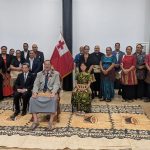
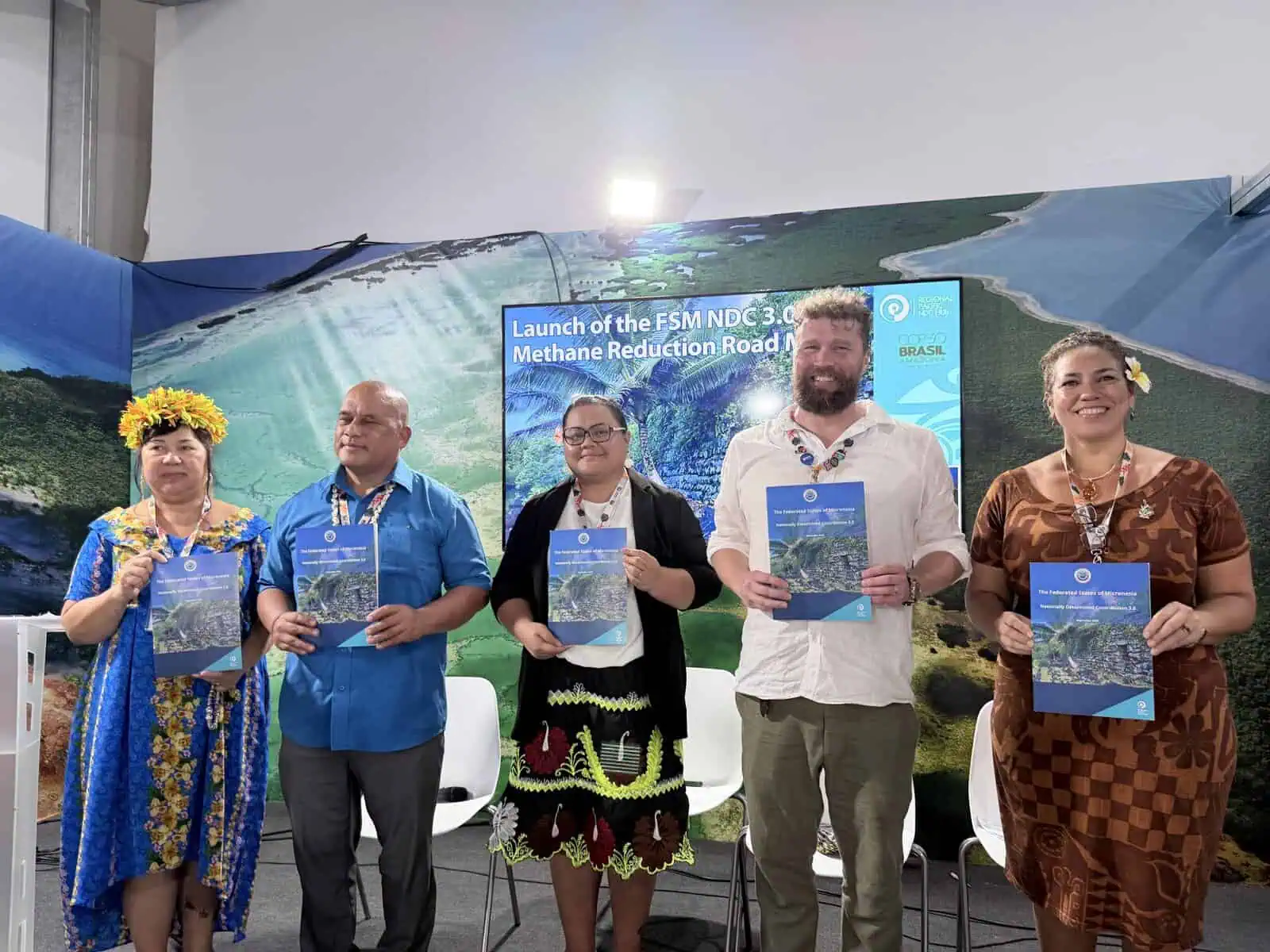
The Federated States of Micronesia (FSM) has reinforced its commitments under the Paris Agreement with the launch of its Nationally Determined Contribution (NDC) 3.0 and its new Methane Roadmap at COP30, unveiled at the Moana Pavilion in Belém, Brazil.
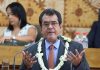
Head of Delegation and FSM Minister for Climate Change, Elina Akinaka, said the new documents “transcend clear policy frameworks.”
“It embodies our collective resolve to act, innovate and lead,” she said.
The updated commitments lay out a clear pathway for how FSM intends to balance ambition with realism, aligning national priorities with global climate responsibilities. Alongside its strengthened NDC, FSM’s Methane Roadmap marks a significant expansion of its mitigation efforts.
“Our methane roadmap enables us to address one of the most potent greenhouse gasses through the strategies that are both practical and transformative,” Akinaka said.
But she emphasised that real progress hinges on cooperation: successful implementation will require collaboration across government agencies, communities, regional partners, and development institutions.
“It will require the same spirit of partnership and perseverance that has brought us to this moment,” she said.
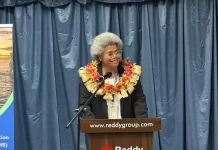
Pacific Community (SPC) Director for Climate Change, Coral Pasisi, praised FSM’s efforts, calling the launch “a real milestone” that reflects a new era of Pacific land, climate ambition, resilience, and unity.
“It is no small feat for a country that has four states, thousands of islands and not an easy thing to consult everybody in pulling together,” Pasisi said.
SPC reaffirmed its support and commended FSM’s leadership in advancing the shared Pacific goal of maintaining the 1.5°C temperature limit.
Pasisi said the FSM 3.0 NDC was a very powerful example of turning national priorities into concrete actions.
“It reflects the values that define specific resilience, stewardship and determination.”
Among the “absolutely outstanding” features of FSM’s NDC, Pasisi highlighted commitments to expand renewable energy access and reduce dependence on imported fuels.
“We stand ready with FSM in achieving its commitment to achieve 70 per cent renewable energy in electrification generated by 2030 and 80 per cent by 2035.”
These ambitions come with conditions related to resources, capacity, and technology—critical factors for implementation. Additional key targets include ecosystem restoration from mangroves to coral reefs, strengthening the sustainable management of 50 per cent of FSM’s marine resources, and conserving 30% of its terrestrial ecosystems.
“So that’s even bigger than the goals that we’ve seen through the CPD processes and negotiations, which I think is outstanding.”
FSM’s NDC 3.0 ambitions are supported by SPC through the Regional Pacific NDC Hub, with donor support from the European Union in the Pacific and the Australian Department of Climate Change, Energy, the Environment and Water (DCCEEW). The commitments include:
*70 percent renewable energy by 2030 and 80 percent by 2035
*Universal electricity access by 2035
*Expansion into new sectors: Transport, Waste and Oceans
*Strengthened water, food, health and coastal protection across all states
*Improved data, transparency and monitoring to drive decision-making
The Pacific Community hosts the Pacific NDC Hub, which provides technical and measurable support to all Pacific countries as they advance their NDC commitments.
“Our partnership with FSM in all countries and the NDC hub is not just about a document, it is about results on the ground, and we have successfully navigated the complex Green Climate Fund (GCF) and Adaptation Fund (AF) arrangements, with our credit to the entity function and so has spread and other colleagues that we’re bringing to the table. And that is really helping to support mobilizing funds already for FSM in other countries.”
Akinaka reiterated that FSM’s ambitions are grounded in both determination and practicality.