


Pacific Island nations are calling for urgent action at COP30, emphasising that keeping global warming within 1.5°C is no longer a political aspiration but a scientific necessity.
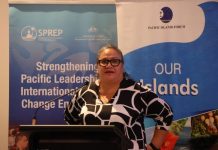
Speaking online from the ongoing climate negotiations, Karlos Lee Moresi, Team Leader for Climate Finance and Resilience at the Pacific Islands Forum, outlined the region’s key priorities: limiting warming, securing climate finance, protecting oceans, and ensuring Pacific voices are heard in future COP events.
“Our number one priority has always been 1.5 degrees to stay alive,” Moresi said. “It used to be viewed as a political position. Now it's actually a reality backed by science.”
While mitigation remains critical, Moresi stressed that adaptation requires immediate resources.
“The reality is that for the Pacific, being able to adapt in our daily realities requires resources.
And that means access to financing,” he said, highlighting the ongoing struggle of Pacific nations to secure sufficient climate funding.
Oceans also remain central to the region’s agenda.
“Oceans we see not just in terms of the livelihoods of the Pacific, but as the lungs of the universe. They capture carbon dioxide and create a vast reality for the Pacific, as we call ourselves the Blue Pacific and the large ocean states,” Moresi said.
The Pacific is also focused on shaping COP31, which Australia is bidding to host.
“We’re not saying it’s an Australia-Pacific COP anymore. We’re just saying it’s a Pacific COP to be hosted by Australia,” he said, underlining the importance of ensuring Pacific priorities, like ocean protection and access to climate finance through mechanisms such as the Pacific Resilience Facility, are reflected in the agenda.
Moresi cited the International Court of Justice (ICJ) advisory opinion as legal backing for the region’s climate advocacy.
“We’ve been leveraging the opinion, even though a lot of people will say it’s only an opinion.
But it is the opinion of the highest court in the globe. It’s the most informed opinion on this issue. It’s not to be taken lightly,” he said.
The ICJ opinion, he added, strengthens legal arguments around climate finance obligations and could influence future global decisions on climate action.
Despite complex negotiations, the Pacific remains focused on elevating its priorities, including adaptation, climate finance, ocean protection, and social inclusion.
“We have champions for gender, social inclusion, oceans, mitigation, adaptation, loss and damage, and just transition,” Moresi explained.
“Their role is to push our priorities into the political sphere and ensure our asks are respected in the COP outcomes.”
On recent climate science warnings, including the World Meteorological Organisation’s indication of a potential temporary overshoot of 1.5°C, Moresi reaffirmed the Pacific’s stance.
“Even if it’s overshoot temporarily, we need to keep pushing this narrative to try and bring it back down. The investment in renewable energy is moving in the right direction, and we must continue to push for implementation that aligns with 1.5°C.”
As COP30 negotiations continue, the Pacific Islands are advocating for a climate agenda that prioritises survival, access to finance, and ocean stewardship, ensuring that some of the world’s most vulnerable communities remain at the centre of global decision-making.