By Marie McInerney
As world leaders meet in Brazil this week (6 and 7 November) ahead of the COP30 UN climate negotiations, Indigenous and climate health leaders have urged the Australian Government to ensure an authentic COP31 comes to the Pacific.
They were speaking at the recent Climate + Health Summit 2025, which also heard calls from Emma Rawson-Te Patu, President of the World Federation of Public Health Associations, for the health sector and other concerned citizens to step up on climate action and commit to decolonising their work.
Australia must play a serious role at this month’s United Nations climate change meeting in Brazil if it is to have any hope of jointly hosting an authentic COP31 with Pacific nations next year and addressing for the existential threat facing the region.
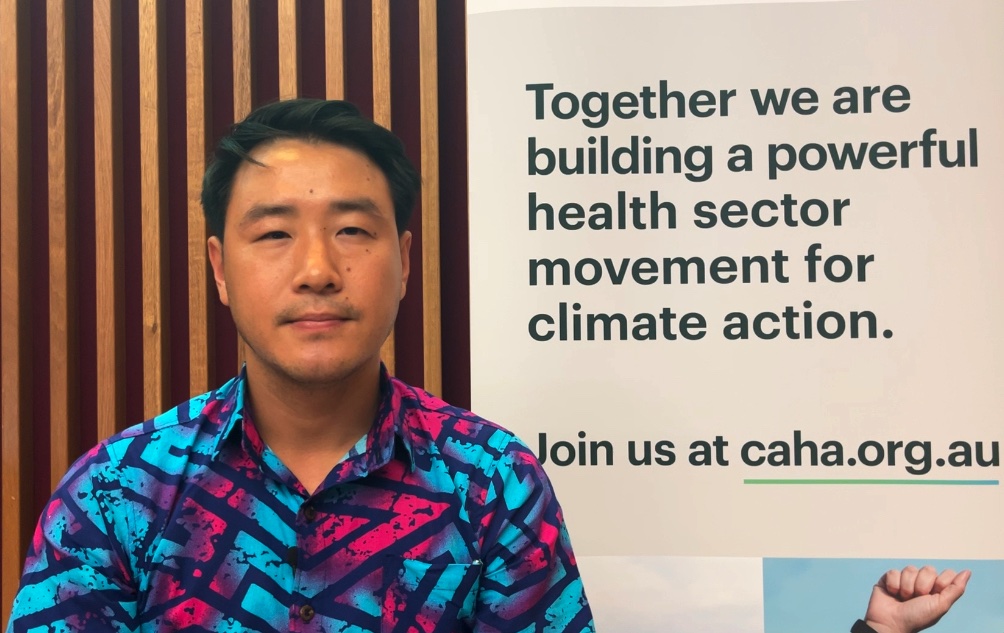
That was a key message at last week’s Climate + Health Summit from Solomon Islander human rights lawyer Solomon Yeo, who earlier this year helped make headlines and history through a landmark International Court of Justice advisory opinion calling nations to account on climate action.
Yeo also urged those attending the summit and others working in health to step up in support of the ruling, which is non-binding legally, saying it will require “enormous efforts of concerned citizens around the world to bring this opinion to life”.
In a panel discussion and later interview with Croakey, Yeo said he could not over-emphasise the important role of the Australian and New Zealand governments in ensuring that COP30 negotiations meet the needs of Pacific and other small island countries.
He also warned there was no point trying to secure hosting duties for a joint Australian/Pacific COP31 in Adelaide in November 2026 if governments were not prepared to really work for change.
“Of course, many of us would love to see a COP hosted in the Pacific, but we don’t want to see another COP like the other COPs,” he said. “We really want to see a COP that truly matters.”
Yeo told Croakey he really didn’t know much about climate change until he went to University of the South Pacific in Vanuatu to study law.
There he began to learn about its impact on the Pacific, as well as the unrelenting efforts of Pacific Islanders to put their case on the global agenda.
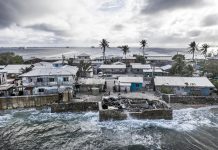
He began to learn why his island nation’s coral reefs are turning white, watched how his communities struggle, especially to grow and catch sufficient food amid rainfall and flooding, and is seeing many people forced to move away from their communities to bigger population areas.
“It’s heartbreaking,” he said, to see how climate change has affected “the people I know, the people that I love, the places that I care for”.
In 2019, Yeo was in a lecture hall, discussing with fellow law students the potential of persuading the International Court of Justice (ICJ), the world’s highest court, to issue an advisory opinion in response to a key question: Do States have a legal duty to protect our environment and our climate?
He went on to be president and campaign director of what became the Pacific Island Students Fighting Climate Change (PISFCC), taking that question, as the Guardian reported, on an “extraordinary, improbable journey from a law school classroom in Port Vila to the Hague”, via the UN General Assembly in New York.
In July this year, the ICJ ruled that States have an obligation to protect the environment from greenhouse gas emissions and to act with due diligence and cooperation to fulfill this obligation and commitments under the Paris Agreement to limit global warming to 1.5°C above pre-industrial levels.
The Court further ruled that if States breach these obligations, they incur legal responsibility and may be required to cease the wrongful conduct, offer guarantees of non-repetition and make full reparation depending on the circumstances, the UN advised.
Yeo told Croakey it also clarified what has been a “really pressing” issue for Pacific nations – literally a question of existential importance – as to whether Pacific nations will still retain their maritime boundaries and territories if they are completely submerged by sea level rises.
“And the court said, ‘yes you still do retain those’,” Yeo said.
Use this landmark ruling
The ICJ decision has been hailed globally, with UN Pacific envoy Dirk Wagener declaring that it “shook the foundations of global responsibility” and proved to the world that “the smallest islands can send forth the mightiest waves”.
UN Secretary-General António Guterres welcomed it as “a victory for our planet, for climate justice and for the power of young people to make a difference”.
Yeo, now graduated as a human rights lawyer, is realistic, saying he knows the advisory opinion is no “silver bullet” to action on climate change.
But he says it’s a vital step forward, in that it brings greater clarity to the negotiating table in international forums like the upcoming COP30 and a strong response to the ambiguousness and vagueness that have been used as a delay tactic for many nations.
In timely comments, given the National Party’s decision to scrap its net zero commitments, Yeo said the court’s opinion should put an end to “bickering” that the obligations of states to limit global warming to 1.5 degrees “is not a mere aspiration, it’s a legally binding target”.
And it prompts the questions: “Is your standard really meeting the 1.5 degree target? Are you opening up new coal mines? Are you extending coal mines or fossil fuel production that the court has highlighted …contravenes the legally binding obligations of states?”.
Yeo said the ruling not only provides great moral and legal clarity, but has the power to really shape global consciousness, as it has on genocide, apartheid and Gaza.
But while all eyes in climate health are on COP30 this month, he stressed that “the real work is back at home”, in nations like Australia, where governments can stymie negotiations at every turn.
Any conscious person who is concerned about the climate should take action to hold nations accountable to the ICJ ruling, he said.
Asked what people in public health could or should do, he said the ruling is a powerful tool that provides the roadmap to an equitable world.
“Read the opinion, be inspired by it, and…use it as a tool to guide and serve you in attaining the objectives that you think will benefit and contribute to climate action.”
The Climate and Health Alliance (CAHA) hosted the summit last week on the Gold Coast, on the lands of the Yugambeh and Kombumerri peoples. It opened with a Welcome To Country from the Yugambeh Aboriginal Dancers.
CAHA CEO Michelle Isles highlighted the significance of Indigenous knowledges in “this big overwhelming issue of climate change and its intersection with our health”.
“There’s a lot of wisdom in the room,” she said to those attending from across Australia and the Pacific. And, she said, “there’s a lot of wisdom here on this country, thousands of generations here”.
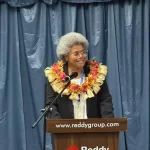
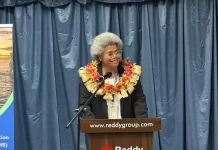
It was a key point for opening keynote speaker Emma Rawson-Te Patu, President of the World Federation of Public Health Associations (WFPHA) who said Indigenous peoples have always known the connection between healthy planet and healthy people.
“Public health is the Western world’s way of making sense of what we’ve always known, [the importance of] holistic approaches to the well-being of people who are dependent on their symbiotic relationship with the planet,” she said.
The trouble too often, when Indigenous people across the globe make appeals for action, those listening warmly applaud them, say ‘that’s really eye opening’, and then they walk away and nothing changes, she said.
She issued summit participants a simple challenge: “One thing I want you to do when you walk away from this place…is to have a commitment to an action that is different from any you have done before.”
Te-Patu (Ngāti Ranginui, Ngai te Rangi, Raukawa, and Ngāti Hauā) is the first Indigenous woman to head the WFPHA. She introduced herself also as a health promoter, researcher, member of the steering committee of the Planetary Health Alliance and the Global Mental Health Action Network, and a soon-to-be expert member of the United Nations Permanent Forum on Indigenous Issues.
As important, she said, is that she is also a Māori woman who worked for a long time in the Aotearoa New Zealand health system, and the daughter of a woman who was a nurse for 50 years.
Te-Patu said she still has hope for profound global change, despite the setbacks on climate, health, and democracy being led by the United States under President Donald Trump.
She highlighted ground-breaking work by the WFPHA in understanding that it needs to live up to its responsibilities and its obligations to Indigenous populations – who bear the greatest burden of disease across the planet – and of what it means to decolonise public health.
The WFPHA’s work on decolonisation was a true example of ‘what can I do differently?’, she said, asking those attending to compare its statement with their organisation’s stand or structure.
“Does [yours] have words like this?”
Learn from the planet’s guardians
Te-Patu later talked with Croakey about attacks on Maori self-determination by the Nationals Government in Aotearoa/New Zealand, which has abolished the Māori Health Authority, sought to remove dual Māori naming in public places and government departments, and provided oxygen to a contentious bill seeking to weaken the landmark Waitangi Treaty.
She was “extremely sad to see what these people are choosing to do,” particularly given Aotearoa/New Zealand has been seen as a beacon of rights in many ways over many years and hoped her compatriots would make sure “we don’t have another government like this one”.
However, she told the summit she was at least fortunate to be an Indigenous person from a first world country with a relative place of privilege – a statement she did not make lightly.
She is mindful of the need to speak up, given most Indigenous people who work on the international stage “live in fear for their families and their lives”, she said.
The Global Witness organisation documented the murders of nearly 200 environmental defenders in 2023. Te-Patu said there were fears that 15 Amazon Water Protectors had gone missing this year alone.
Te-Patu said she has “goosebumps” about the prospect of a Pacific COP31, saying it’s “incredibly important” because the Global South and Western Pacific are “often left out” of these conversations.
In her address, titled ‘Humankind, back to the future’, Te-Patu urged non-Indigenous people working for the planet to learn from Indigenous peoples who “are the guardians of the planet”.
They should listen (“to hear, not to respond”), connect differently, embrace the collective good (“everyone succeeds or no-one succeeds), engage in self-reflection (“who you are and where you fit”), be authentic (“in everything you do”), nourish the world, decolonise everything, reject the status quo and spend less time and effort on outcomes and tasks and more on relationships.
“Ninety-five per cent of your waking life, your working life, your personal life, should be focused on relationships,” she said, finishing with a call to action: “Dare to be better. Dare to be more. Basically, be a good human,” said Te-Patu.