
The Kingdom of Tonga has taken a significant step forward in strengthening its environmental governance framework following the successful completion of a comprehensive five-day workshop on terrestrial aggregate mining guidelines and Environmental Impact Assessment (EIA) processes.
Held from 13-17 October 2025, the workshop was co-organised and facilitated by the Secretariat of the Pacific Regional Environment Programme (SPREP) in partnership with Tonga’s Department of Environment (DoE) and delivered by consultant, Care of Our Environment (COOE).
“The guidelines are an essential tool to support Tonga not only in its quest for sustainable resource management but also on its path to achieving sustainable development,” said Acting Director for DoE, Siosina Katoa.
“We thank SPREP and COEE for working with Tonga to develop these guidelines.”
The workshop was to consult with stakeholders on the development of Terrestrial Aggregate Mining Guidelines and an Operations Manual specifically tailored to Tonga’s context – including alignment with national legal frameworks, land tenure systems and institutional arrangements. It was also to build in-house capacity within the DoE on strengthening national EIA processes and systems.
SPREP Deputy Director General, Easter Chu Shing highlighted the regional and practical significance of the work.
“This workshop is about something fundamental to how we grow as a region – how we extract the materials we need to build our infrastructure, our homes, our futures, while protecting the lands and waters that sustain us,” she said. “It’s about getting that balance right. Across the Pacific, we’re seeing unprecedented development pressure. Roads need building, airports need upgrading, coastal protection requires materials. And increasingly, that means quarrying and aggregate mining.”
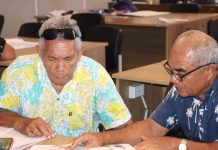
More than 20 participants representing multiple government agencies including the DoE, Ministry of Lands and Natural Resources, Ministry of Police, Department of Geology, Ministry of Infrastructure, as well as private EIA Consultants, quarry operators and local community representatives attended the training. This multi-stakeholder approach ensured that the guidelines reflect the diverse perspectives and practical realities of aggregate mining operations in Tonga.
Participants engaged in intensive discussions on key aspects of sustainable mining practices, including the integration of traditional knowledge and cultural protocols into resource extraction, the harmonisation of legal frameworks governing mining activities, and the development of practical compliance monitoring tools.
The sessions incorporated interactive group exercises where participants applied the draft guidelines to real-world scenarios, providing valuable feedback that will inform the finalisation of the documents.
Unlike generic templates, the Terrestrial Aggregate Mining Guidelines and Operations Manual have been specifically developed to align with the National Spatial Planning and Management Act 2012, the Land (Quarry) Regulations 2025, the EIA Act 2003 and EIA Regulations 2016, and the Arms and Ammunition Act.
The guidelines integrate EIA requirements seamlessly with mining and quarry permitting processes and provide practical checklists for approvals, compliance monitoring, and site rehabilitation. The Operations Manual provides step-by-step guidance for mine operators on best practice approaches to environmental management. These practical tools will support both government regulators and private operators in implementing sustainable mining practices that minimise environmental impacts while supporting Tonga’s development goals.
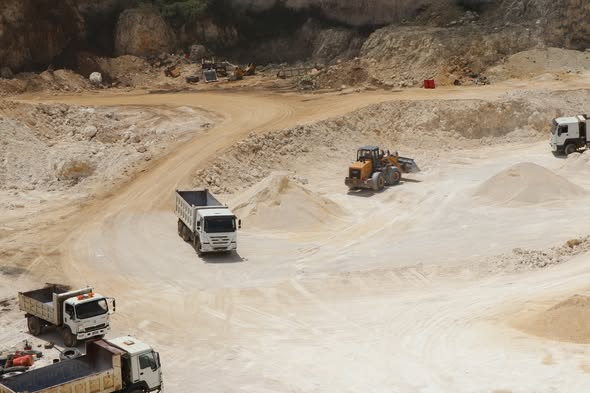
A major highlight of the workshop was the field visits to Malapo Quarry and Lida Quarry on Tongatapu, where participants observed both operational and abandoned quarrying practices firsthand. The field exercises provided an opportunity to test newly developed digital monitoring toolkits using Kobo Toolbox, an innovative mobile data collection platform that will enhance environmental and social compliance assessments for mining operations.
Discussions during the field visits centered on the significant scale of aggregate mining in Tonga, with approximately 6 percent of Tongatapu’s land currently designated for aggregate mining activities. Participants explored critical rehabilitation options for abandoned quarry sites, examining practical approaches to restore degraded landscapes and return these areas to productive use. The field exercises highlighted the importance of integrating site rehabilitation planning from the earliest stages of mining operations.