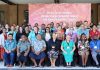


Australia and Papua New Guinea have reaffirmed their partnership as equal allies, with Ministers from both countries meeting in Canberra Monday for the 31st Australia–Papua New Guinea Ministerial Forum, the first since the signing of the landmark Pukpuk Treaty earlier this month.
Co-chaired by Australia’s Foreign Minister Penny Wong and PNG’s Foreign Minister Justin Tkatchenko, the Forum marked a defining moment in the two nations’ 50-year relationship — now elevated to a full Mutual Defence Alliance based on trust, sovereignty, and shared regional stability.
“Ministers underscored that this historic milestone was founded on respect for the sovereignty and mutual benefit of both nations, based on generations of trust and a shared commitment to a stable, prosperous, and peaceful region,” the communiqué stated.
Ministers reflected on the Golden Jubilee celebrations of PNG’s independence on 16 September 2025 and affirmed that relations between the two countries were “at a historic high point.” The Forum highlighted the maturity of PNG’s democracy and its growing regional leadership.
Ministers acknowledged the breadth of progress under the Comprehensive Strategic and Economic Partnership (CSEP), including the Mutual Defence Treaty, the Bilateral Security Agreement (BSA), and new ventures like the PNG Chiefs, a National Rugby League franchise that will join the NRL and NRLW in 2028.
Other achievements included the release of the Australia–PNG Development Partnership Plan (DPP) and increased high-level exchanges between both parliaments.
Under the new Pukpuk Treaty, the Forum reaffirmed that the Alliance would “expand defence cooperation, enhance interoperability, and strengthen joint responses to regional and global security challenges.”
Ministers welcomed the operational handover of the redeveloped HMPNGS Tarangau Naval Base at Lombrum and PNG’s successful hosting of the first overseas iteration of Exercise Talisman Sabre.
They also welcomed the commencement of bilateral consultations for a recruitment pathway for Papua New Guinean citizens to join the Australian Defence Force (ADF) — a move described as “a demonstration of mutual strategic trust.”
Ministers noted that funding through the BSA had made the Australia–PNG policing partnership the largest Australian Federal Police (AFP) collaboration worldwide. New police barracks have been completed in Port Moresby, Mount Hagen, and Kokopo, with more under construction.
The Forum also praised the launch of PNG’s Recruits and Investigations Regional Centre of Excellence, calling it a flagship initiative under the Pacific Policing Initiative (PPI).
Australia congratulated PNG on its 50th independence anniversary and reaffirmed its commitment to the Torres Strait Treaty, marking 40 years since it came into force. Both sides acknowledged the Treaty’s enduring role in connecting traditional inhabitants across borders.
Ministers welcomed the creation of the PNG Chiefs NRL team, calling it “a symbol of our bilateral relationship and our shared love of sport.” PNG thanked Australia for agreeing to establish a special NRL visa package for players, officials, and supporters.
The Forum also agreed to form a working group between immigration and foreign affairs officials to simplify visa processes and enhance mobility under the Pacific Engagement Visa scheme, which continues to grant PNG the highest allocation among participating nations.
Ministers highlighted AUD$7.7 billion (US$5.02 billion) in bilateral trade in 2024 and reaffirmed their focus on trade integration, market access, and investment in critical infrastructure.
Australia confirmed over AUD$1 billion (US$652 million) in grants and loans through the Australian Infrastructure Financing Facility for the Pacific (AIFFP), including investments in ports, roads, and electrification projects.
Ministers noted progress in telecommunications reform and agreed to conduct an independent assessment to guide future reforms that could lower internet costs and boost digital connectivity in PNG.
PNG acknowledged Australia’s AUD$ 3.1 billion (US$2.02 billion) in budget support since 2020 as “a critical short-term measure” while advancing its fiscal reforms under the IMF Extended Credit Facility and Extended Fund Facility Program.
The Forum welcomed Australia’s AUD$707 million (US$461.30 million) in Official Development Assistance (ODA) for 2025–26, focusing on health, education, gender equality, and climate resilience.
Ministers praised the alignment of the new Development Partnership Plan (DPP) with PNG’s Vision 2050 and Medium-Term Development Plan IV, including efforts to strengthen education, empower women and girls, and support people with disabilities.
Ministers noted ongoing cooperation in health, including Australian support for Daru General Hospital, PNG’s polio response, and expanded HIV services. Education initiatives such as the Smarter Safer Schools and PNG Secondary Education Program were also welcomed, along with new technical training programs under the Strongim Wok Long TVET initiative.
Ministers reaffirmed their commitment to Pacific regionalism through the Pacific Islands Forum, supporting the Blue Pacific vision for a peaceful and resilient region.
They commended joint participation in regional peacekeeping efforts under the Pacific Police Support Group, including recent deployments to Samoa, Vanuatu, and Palau.
The Forum also backed Australia’s bid to co-host COP31 in 2026 as a “Pacific COP” and pledged to continue working together to advance regional climate priorities.
Ministers agreed to keep building on the outcomes of this year’s Forum, which they said “reflected the deep, trusted and enduring nature of the Australia–PNG relationship.”
They confirmed the next Australia–Papua New Guinea Ministerial Forum will review progress across all six pillars of cooperation — democracy, friendship, economic growth, security, development, and regional partnership — ensuring the Alliance remains central to the Pacific’s peace and prosperity.