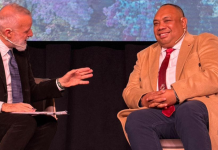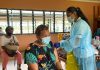
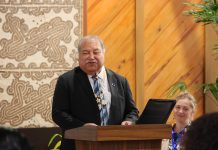

Fiji Prime Minister Sitiveni Rabuka last night reaffirmed Fiji’s commitment to advancing health and well-being across the Pacific.
The Prime Minister conveyed these remarks while officiating 76th World Health Organisation (WHO) Regional Committee Meeting for the Western Pacific in Nadi.
The week-long regional meeting is attended by senior health officials from the 38 Member States in the region.
In his address, Prime Minister Rabuka noted that the last time Fiji hosted this meeting was in 1984, when the Western Pacific Region had only 17 Member States.
“Today, we are 38 strong, collectively serving more than 2.2 billion people, more than a quarter of the world’s population,” he said.
The Prime Minister highlighted both the region’s achievements and its evolving health challenges, including non-communicable diseases (NCDs), HIV, substance abuse, tuberculosis, influenza, and the growing mental health burden worsened by COVID-19 and climate-related disasters.
“NCDs and mental health challenges are lived realities for almost every Fijian family,” he said.
“Non-communicable diseases account for more than 80% of deaths in Fiji, hindering our social development. Mental health issues, often unrecognised, leave our adolescents vulnerable to trauma, stress, and substance abuse.”
Prime Minister Rabuka outlined Fiji’s proactive measures, including legislative reforms to restrict unhealthy food marketing, healthy school policies, and greater investment in mental health services, particularly through decentralised care and training in psychological first aid.
However, he emphasised that “stigma, underfunding, and data gaps remain significant barriers to progress.”
He also called for targeted international financing for Small Island Developing States (SIDS) to address the growing costs of NCDs and mental health care, noting that these challenges are compounded by climate change, food insecurity, and geographic isolation.
Underscoring Fiji’s national philosophy of an “Ocean of Peace,” the Prime Minister linked peace, compassion, and inclusive governance to better health outcomes.
“Peaceful societies are healthier societies. Inclusive governance fosters stronger health outcomes. Compassion in leadership will deliver people-centred systems,” he said.
“The path to a healthy Pacific is not just through hospitals and policies but also through justice, empowerment, equity, and love for our people.”
Reiterating Fiji’s advocacy at the recent United Nations General Assembly, the Prime Minister said Fiji continues to push for universal health coverage, pandemic preparedness, and climate-resilient health systems — aligning with the 2050 Strategy for the Blue Pacific Continent.
“Healthy people drive economic growth; healthy communities build national resilience; and healthy systems protect us from future crises,” he said.
Prime Minister Rabuka said the meeting offers “a chance to reflect, reset, and reimagine our shared future.”
“May your deliberations be guided by wisdom, unity, and purpose, and may our decisions this week lay the groundwork for a healthier, more peaceful, and more resilient Western Pacific Region,” he said.
With representatives from 38 member states gathered, serving over 1.9 billion people, the focus is on several critical topics, including non-communicable diseases (NCDs), the mental health fallout from the COVID-19 pandemic, and the troubling rise of substance abuse disorders.
Dr Saia Ma’u Piukala, the WHO Regional Committee for the Western Pacific, underlining the importance of unity and compassion in health initiatives throughout the region.
The gathering is especially notable, marking the first time the Pacific has hosted the meeting in over a decade, which emphasises the region’s critical role in global health.
Dr Piukala reinforced the need to empower Pacific voices in health discussions and outlined the week’s agenda, which covers NCDs, climate change, and preparedness for health emergencies.
The resurgence of HIV in areas like Papua New Guinea, the Philippines, and Fiji was also a point of discussion, and Dr Piukala praised Fiji’s proactive measures to combat this issue. Throughout the week, the spirit of talanoa—open and respectful dialogue—will be a guiding principle as participants work together towards a healthier Western Pacific region.
Dr Piukala reminded everyone of a poignant Fijian proverb: “Na liga e dua, e sega ni rawa, ni laveta, na vatu levu”—a single hand cannot lift a heavy stone, but together, we can. This sentiment is a beautiful reminder of the power of collective effort in overcoming challenges.