
National Geographic Pristine Seas will study Vanuatu’s ocean ecosystems — which are known for their high biodiversity and at-risk species — in a bid to safeguard one of the most climate vulnerable regions in the world.
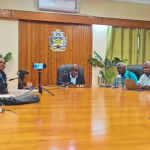
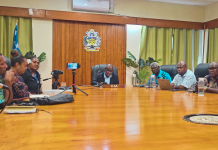
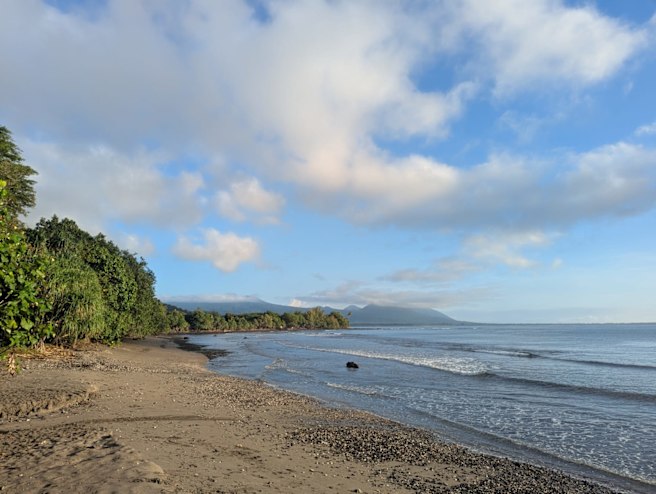
National Geographic Pristine Seas Tuesday launched a month-long expedition to study Vanuatu’s ocean, which is under threat from frequent cyclones, warming temperatures, and overfishing. By invitation from the Government of Vanuatu, the expedition will document the ocean’s stunning biodiversity and geology, providing data for the nation’s marine spatial planning efforts.
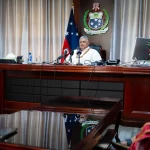
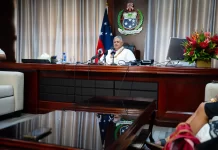
“I take ocean management very seriously for my nation. Our sovereign territory is 98 percent ocean and we are SOLWARA people,” stated Jotham Napat, the Prime Minister of Vanuatu.
“The scientific data and information that Pristine Seas will provide for Vanuatu through the upcoming expedition will enable us to know clearly the state of our ocean ecosystems and the extent of biodiversity loss.”
A team of experts from Vanuatu and around the globe will work aboard the Argo, a ship equipped with cutting-edge technology for exploration, research and filmmaking. The expedition is being conducted in partnership with Blue Prosperity Vanuatu; the Vanuatu Ministry of Fisheries, Oceans and Maritime Affairs; and the Vanuatu Ministry of Climate Change Adaptation, Meteorology and Geo-Hazards, Energy, Environment and National Disaster.
Expedition team members will gather data about the marine ecosystems surrounding Vanuatu’s 80-plus islands, which are home to a stunning variety of coral reefs, mangrove forests, deep-sea habitats, and seabird colonies. One species the researchers hope to document on their expedition is the dugong, or sea cow, known locally as kowfis. These relatives of the manatee graze on sea grass, and their presence can indicate an area’s health.
In addition to filling gaps in data requested by the government, Pristine Seas — which will explore from nearshore to offshore, and from shallow water to deep — will create a documentary film highlighting local communities’ special relationship with the sea.
“Our expedition aims to combine traditional knowledge with contemporary science to paint a picture of Vanuatu’s ocean, with an eye on protecting it,” remarked Paul Rose, Pristine Seas’ expedition leader. “Vanuatu is already a leader in fighting climate change, so we’re excited to be here — working with local experts who know the ocean so intimately.”
State-of-the-Art Science Meets Conservation
Using cameras that drop to the bottom of the seafloor, shallow ones that float at 10 meters deep, SCUBA dive surveys, seabird counts, and more, the expedition intends to strengthen Vanuatu’s marine spatial plan (MSP) and identify additional areas for marine protection. The team is assessing places for which little scientific data is currently available.
Pristine Seas’ submersible, the Argonauta, will enable team members and policymakers to explore the deep sea. An underwater science lab, the sub can dive down to 1,300 meters, so researchers can study underwater life in real-time. Attached to the sub are filters for environmental DNA (eDNA) sampling — a method that allows scientists to collect small bits of matter that can later be sequenced to identify organisms not always seen with cameras or the naked eye.
Data collected with these tools help leaders make decisions about what parts of the ocean to protect.
“As the first nation in the Pacific to enact a national ocean policy, Vanuatu has a solid vision for ocean conservation — committing to the full protection of 30 percent of its ocean space by 2030,” said Mia Rimon, Pristine Seas Melanesia Policy Lead.
“In remote provinces that are heavily dependent on marine resources for food, nutrition security and income, people want to know why their fish resources are declining and why their coral reefs are dying,” continued Rimon. “Ni Vanuatu people are ocean people and they want solutions to heal and revive their marine space while they still can.”
Marine protected areas (MPAs) are a proven solution for countries looking to conserve their ocean. Reserves where fishing and other damaging activities are banned restore marine life within their boundaries. That, in turn, replenishes nearby fish populations and improves local fishing, provides jobs and economic benefits, and builds resilience against a warming ocean.
Vanuatu has used traditional fisheries management including Tabu areas for thousands of years as part of its intact chiefly system, and is home to a network of community-led protected areas. One example is the Nguna-Pele Marine and Land Protected Area Network, founded in 2002 by four traditional chiefs. Together, sixteen Indigenous communities on the islands of Nguna and Pele manage and sustainably use 3,000 hectares of marine and land ecosystems, including coral reefs, seagrass beds, and mangrove forests.
Recognising the need to conserve the country’s biodiversity, Prime Minister Napat remarked: “I am gravely concerned with the continued decline of our ocean health caused by climate change, overfishing and population growth. Together with Pristine Seas, our partners and all of our government ministries, we are working toward establishment of large Marine Protected Areas to enable our Solwara to revive and recover, to ensure that our people will have access to abundant marine resources to support our lives for all future generations of Ni Vanuatu.”
From Shallow to Deep
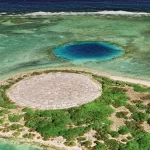
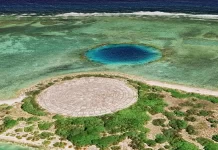
Among other areas, the expedition team will study Torba — the northernmost and least populated province of Vanuatu, which consists of large steep-sided volcanic islands and low lying atolls. The expedition will also explore the waters of Shefa Province, which includes the Kuwae Crater and Tongoa Wall, a submerged volcano, vents, seabird colonies, and coral reefs.
“Vanuatu’s oceans hold some of the most extraordinary marine biodiversity in the Pacific — from volcanic seascapes and deep sea mysteries waiting to be discovered to vibrant coral reefs and the species and communities that depend on them,” said Lindsay Young, Pristine Seas’ Vice President of Research. “Together with local scientists, we hope to support Vanuatu’s vision for a healthy ocean future that protects biodiversity, sustains livelihoods, and inspires the next generation of ocean stewards.”
Pristine Seas will host youth aboard the Argo to learn about the tools used by marine scientists and filmmakers and is co-developing a program for twelve young people in Laone Village, Pentecost, alongside National Geographic Photo Camp. In addition to providing a meaningful introduction to storytelling through photography and writing, with mentorship from National Geographic Explorers and local photographers, the engagement will focus on documenting traditional and local knowledge of marine conservation from community elders.
International Climate Ruling
The expedition launch comes shortly after the July 2025 advisory opinion of the International Court of Justice (ICJ), which was requested by Vanuatu in collaboration with other nations. In its unanimous opinion, the Court affirmed that states have a legal obligation under international law to undertake ambitious action to reduce greenhouse gas emissions, cooperate for climate justice, and may face legal consequences, including reparations, if they fail to act. In its opinion, the ICJ noted that small island states — of which Vanuatu is one — are “particularly vulnerable” to the devastating impacts of climate change.
“By filling critical science gaps and supporting Vanuatu’s leadership, we’re helping ensure that small island nations can defend their rights, protect their ocean, and strengthen their resilience in the face of climate change,” remarked Rose.
Pristine Seas launched its Global Expedition in 2023 with the ambitious goal of exploring the tropical Pacific in support of communities’ efforts to protect their ocean. The Vanuatu expedition will be the 11th stop on the Global Expedition, which has already surveyed ecosystems in the Southern Line Islands, Tongareva, Niue, the Republic of the Marshall Islands, the Federated States of Micronesia, Palau, Papua New Guinea, the Solomon Islands, Tuvalu, Fiji and Rotuma.
Kevin Chand, Pristine Seas’ Sr. Pacific Policy Director: “We’re excited to support the Vanuatu Government’s National Ocean Policy and marine planning efforts, having consulted with leaders on the goals and locations for exploration. The transboundary nature of the Torba portion builds upon the joint-border Tirvau Agreement. Having completed an expedition to Temotu, Solomon Islands last year, we are delighted to close the loop with collecting biodiversity on the other side of the border in Torba.”
Chris Thompson, Pristine Seas Vanuatu expedition science lead: “Our expedition will build on Vanuatu’s strong foundation of ocean protection, providing crucial marine data to help the nation achieve its progressive conservation goals. By exploring both known and uncharted waters with advanced technology, we can support Vanuatu’s commitment to a sustainable and thriving ocean for all.”
Kirsten Elstner, National Geographic Explorer in Residence and Founder of National Geographic Photo Camp, who will serve as an instructor and lead the Photo Camp Vanuatu project: “We’re honoured to support the work of the community, and of Pristine Seas, to engage young people and to understand their perspectives on the topic of ocean stewardship and protection. The next generation of storytellers are already shaping our future, especially when it comes to ocean conservation. It’s important that they are encouraged to tell their own stories while also uncovering the essence of traditional knowledge from their community elders to form their own unique vision for the future. It’s my hope that with this collaboration we are able to do just that, and the students’ powerful imagery and written words become a bridge, connecting the wisdom of the past with the promise of a world seen through their eyes.”
Jeremie Kaltarava, Blue Prosperity Vanuatu Country Manager: “Protecting our ocean is the most powerful way to secure a future of healthy fisheries and abundant resources for our people. By working together, we can ensure these vital marine ecosystems continue to support sustainable livelihoods, income generation, and food security for Vanuatu and the entire Pacific. We are proud to partner with National Geographic Pristine Seas on its upcoming expedition in Vanuatu, which will build upon and complement research from partners across the country gathered during the 2023 nationwide ocean science expedition, led by the Government and Blue Prosperity Vanuatu.”