

The BBNJ Agreement has reached a global milestone with 60 ratifications paving the way towards entry into force by January 2026.
For the Pacific Islands region, home to large ocean island states within the world’s largest ocean, this agreement is a symbolic lighthouse guiding the way for our Pacific islands voyage towards further protection of our biodiversity.
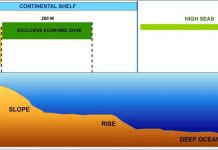
Formally known as the Agreement under the United Nations Convention on the Law of the Sea on the Conservation and Sustainable Use of Marine Biological Diversity of Areas Beyond National Jurisdiction, (the BBNJ Agreement) or the High Seas Treaty, focusses on protecting biodiversity in international waters which spans nearly two-thirds of the ocean.
Informal discussions on this issue began at the UN in 2004 leading to nearly 20 years of negotiations by governments including that of our Pacific Islands for a legally binding agreement that will protect marine biodiversity.
In the face of the triple planetary crisis this is a huge step of hope – a global framework that will address the loss of our biodiversity.
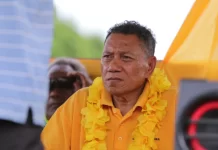
“This is testimony to the success of global diplomacy and multilateralism at work. My hope is this treaty will be the catalyst that brings 30 percent of our world’s ocean that lie beyond any national jurisdiction, into protection and conservation,” said Sefanaia Nawadra, Director General of the Secretariat of the Pacific Regional Environment Programme (SPREP).
“We, as Pacific Islanders have jurisdiction of an ocean area larger than the combined land area of Canada, China and the USA. We welcome this Treaty and look forward to the impact it can have on saving our ocean, extending conservation into the high sea pockets we have in our region. We, as the Secretariat can complement and strengthen the work we do through the Parties to the Noumea Convention for the Protection of Natural Resources and Environment of the Pacific Region.”
SPREP works in partnership with Members and partners towards building resilience and addressing the triple planetary crisis including that of halting biodiversity loss.
SPREP looks forward to the new impetus this treaty can bring in protecting and conserving our ocean and biodiversity.
“We at SPREP eagerly anticipate the effective implementation of this Treaty and are fully committed to supporting its successful execution. We stand ready to work with our Members to implement the High Seas Treaty contributing to our resilient Blue Pacific.”
“We congratulate our Pacific negotiators that spent many hours across the past two decades working to bring about this Treaty for all humanity and our environment.” said Nawadra.
Informal discussions on the BBNJ started in 2004. It reached the milestone of 60 State ratifications needed to bring its entry into force with the deposit of instruments by four new countries this week – Sri Lanka, St Vincent and the Grenadines, Sierra Leone and Morocco.
Adopted at the UN Headquarters, New York in June 2023, Palau was the first country to ratify on 22 January 2024. Along with 60 ratifications, 142 countries plus the European Union have signed indicating their intent to ratify.
All 14 Pacific Small Islands Developing States have signed with Federated States of Micronesia, Fiji, Palau, Republic of the Marshall Islands, Solomon Islands, Tuvalu and Vanuatu having ratified the High Seas Treaty.