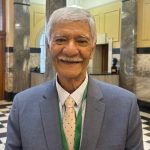
“If our islands vanish, if livelihoods collapse, if cultures are lost, the world will have failed not only us, but it will also have failed itself,” says Tuvalu Prime Minister Feleti Teo.
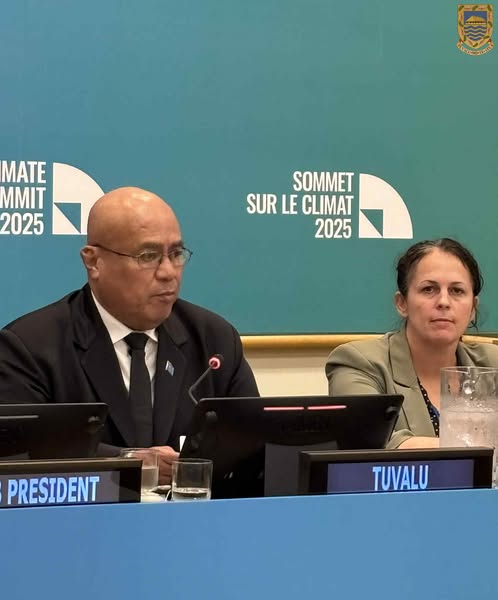
As leaders gathered for the crucial UN Special High-Level Event on Climate Action in New York, Tuvalu Prime Minister Teo stressed the critical importance of the Climate Summit 2025.
With rising tides and intensifying storms threatening the very existence of Tuvalu and other Small Island Developing States, this summit served as a pivotal opportunity to advance bold Nationally Determined Contributions (NDCs) under the Paris Agreement.
The Climate Summit 2025 aimed to galvanise momentum for climate action and foster a just, resilient, low-carbon future. This event was a vital step towards the upcoming COP30 conference in Belém, Brazil, where nations would be called upon to demonstrate the effectiveness of their adaptation strategies.
Prime Minister Teo addressed the High-Level Solutions Dialogue on Climate Change Adaptation, emphasising the immediate and existential threat climate change posed to Tuvalu.
He stated: “For Tuvalu, adaptation marks the line between continued existence and irreversible disappearance.”
“Adaptation could not become yet another catalogue of promises; it had to be a turning point that bridged plans to protection and transformed pledges into tangible actions,” he continued.
The Prime Minister’s intervention focused on the need for clarity in climate finance and adaptation measures, ensuring that support was timely and aligned with local needs and priorities.
As the world prepared for a significant dialogue on climate action, Tuvalu invited partners to collaborate through its National Adaptation Plan and the Tuvalu Survival Fund.
These frameworks were designed to empower local communities, integrate indigenous knowledge, and promote justice in adaptation efforts.
This summit was not only crucial for Tuvalu but also served as a clarion call to the global community to address the climate crisis head-on, ensuring that the least responsible for climate change were supported, and that adaptation led to equity, justice, and humanity.
“We needed to rise to this challenge at COP30 by adopting a comprehensive Adaptation Package that scaled up resources and closed the adaptation gap,” said PM Teo.