

By Pita Ligaiula in Honiara
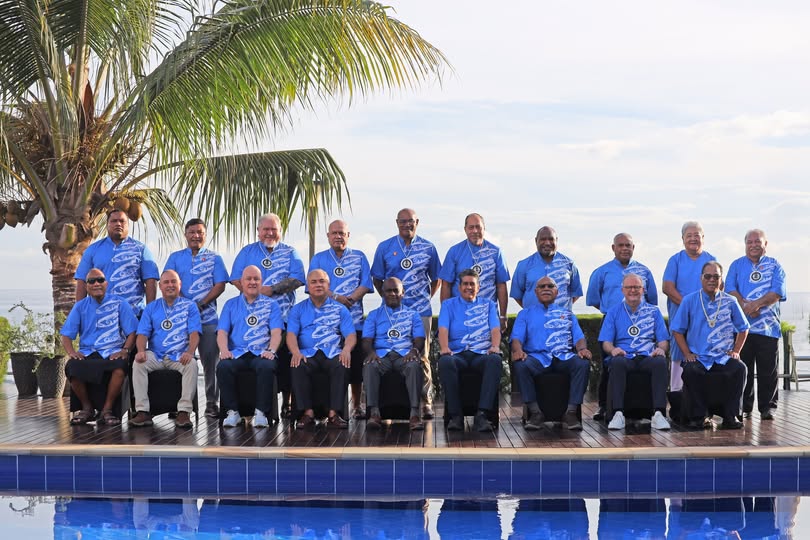
Pacific Islands Forum Leaders have formally declared the region an “Ocean of Peace,” a move they say is essential to protecting sovereignty, addressing climate threats, and confronting the legacy of nuclear weapons testing in the Pacific.
In adopting the Blue Pacific Ocean of Peace Declaration, Leaders reaffirmed peace as a defining element of the “Pacific Way,” grounded in dialogue, consensus, and respect for cultural traditions.
“We, the Leaders of the Pacific Islands Forum, therefore declare the Blue Pacific Continent as an Ocean of Peace,” the Forum Leaders communique said.
The declaration commits Forum members to embedding peace in national and regional policies, cultivating inclusive and culturally rooted approaches to conflict prevention, and strengthening regional cooperation through the Forum.
Leaders also pledged to safeguard the region against nuclear contamination, uphold the 1985 South Pacific Nuclear Free Zone Treaty, and address hazards posed by unexploded ordnances and other remnants of war.
It calls for recognition, remediation, and reparations for affected communities, saying these are “critical to promoting peace in the region.”
The text highlights climate change as a direct threat to regional peace and security, linking the survival of Pacific peoples to stronger global action.
“Bold, decisive and transformative action, through the Paris Agreement and other relevant mechanisms, to limit global warming to 1.5C … is critical to the peace and security of our Blue Pacific Continent,” it said.
The declaration also recommits the region to “supporting a rules-based international order, grounded in the Charter of the United Nations” and protecting the Blue Pacific Ocean from multidimensional threats, including nuclear proliferation and geopolitical coercion.
The Ocean of Peace builds on a long line of regional commitments to stability and security. The 2000 Biketawa Declaration laid the foundation for collective responses to crises, including interventions in Solomon Islands. In 2018, the Boe Declaration expanded the security agenda to include human security, cyber threats, and climate change.
Forum Leaders said the new declaration represents a natural progression: a collective vision of peace for the entire Pacific continent, grounded in sovereignty and the shared heritage of the ocean.
Leaders called on all states and non-state actors to respect Pacific sovereignty, engage through Forum-endorsed mechanisms, and support the integration of the Ocean of Peace into international frameworks.
They urged long-term investment in inclusive and resilient development, recognition of Small Island Developing States’ vulnerabilities, and responsible use of technology and innovation to strengthen regional stability.
The declaration makes clear that the Ocean of Peace is not just about current challenges but about safeguarding the future.
Forum Leaders described peace as an “intergenerational responsibility” that requires protecting cultural identity, strengthening governance, and ensuring that future generations inherit a stable, secure, and prosperous Blue Pacific.
With the declaration now adopted, the Forum has positioned peace alongside climate action, regionalism, and resilience as core pillars of its collective vision under the 2050 Strategy for the Blue Pacific Continent.