
By Pita Ligaiula in Honiara, Solomon Islands
Solomon Islands’ hosting of the 54th Pacific Islands Forum (PIF)
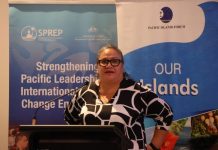
Leaders’ Meeting next week will be a defining moment for Pacific regionalism and a test of whether the Blue Pacific can withstand growing geopolitical rivalry, says Solomon Islands academic Dr Transform Aqorau.
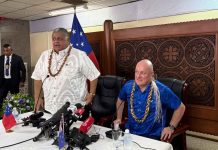
Dr Aqorau, Vice Chancellor of Solomon Islands National University (SINU), said the summit in Honiara comes at a time of heightened scrutiny of Solomon Islands’ foreign policy and its growing ties with China.
“The Solomon Islands is at the centre of Pacific diplomacy, and how we handle this Forum will reflect whether we are strengthening regional unity or becoming a wedge in it,” Dr Aqorau said.
The Solomon Islands government has taken the unusual step of barring dialogue and development partners from this
year’s meeting. This means countries such as the United States, China, Japan and Taiwan – all of whom normally engage with Forum leaders – will not be present.
Prime Minister Jeremiah Manele defended the move as being “in the spirit of sovereignty and respect for the Pacific Way”, saying leaders needed space to discuss their own affairs without distraction.
But critics argue the decision was driven by pressure from Beijing, particularly over Taiwan’s participation. Taiwan has attended Forum meetings as a development partner since 1992, and its exclusion has drawn strong reactions from Pacific nations that recognise Taipei, including Palau, Tuvalu and the Marshall Islands.
Dr Aqorau warned that excluding partners, and Taiwan in particular, could risk the unity of the Forum.
“We cannot afford to let external powers dictate who sits at the Pacific table. The Forum must remain true to its purpose – a space for Pacific nations to decide their future together,” he said.
He added that Solomon Islands’ position could damage its standing as host.
“If the Solomon Islands is seen as bending to Beijing’s pressure, it risks undermining decades of Pacific consensus.
That would be a heavy price for our people and the Forum as a whole,” Dr Aqorau said.
Since Solomon Islands switched diplomatic recognition from Taiwan to China in 2019, Honiara has become a focal point of great-power competition in the Pacific. Its 2022 security agreement with Beijing alarmed neighbours and Western partners, sparking fears of a potential Chinese military presence in the region.
The U.S, Australia and other partners have since stepped up their engagement, reopening embassies, pledging aid, and supporting Solomon Islands’ preparations to host the Forum. Australia has provided vehicles and logistics support, while China has donated a separate fleet of cars and direct financial assistance for the summit.
Analysts say this competition has put Solomon Islands in an uncomfortable position – receiving much-needed support but also drawing suspicion that its decisions are influenced by external powers.
The Forum brings together 18 member states and territories. In recent years, it has recovered from a damaging split, when Micronesian countries threatened to leave over leadership disputes. Leaders reconciled in Tonga last year, with 17 of 18 members present.
Dr Aqorau said the Honiara summit is a chance to show that Pacific unity remains intact.
“This is Honiara’s moment to show leadership. The Pacific cannot be a chessboard for others – we must stay united and act in our own interests,” he said.
Leaders are expected to deliberate on climate change, ocean governance, fisheries, and regional security, while carefully navigating the geopolitical rivalry unfolding around them.
“The Forum must send a clear signal that Pacific nations will not be divided by external agendas. Our solidarity is our greatest strength,” Dr Aqorau said.
As leaders gather in Honiara, the Solomon Islands government insists that its decisions are motivated by Pacific interests, not foreign influence. But with dialogue partners excluded, and questions over Taiwan still looming, the summit will be closely watched across the region and beyond.
For Dr Aqorau, the choice is clear.
“We must not lose sight of why the Forum exists – to bring Pacific peoples together, to speak with one voice, and to chart our destiny on our own terms,” he said.