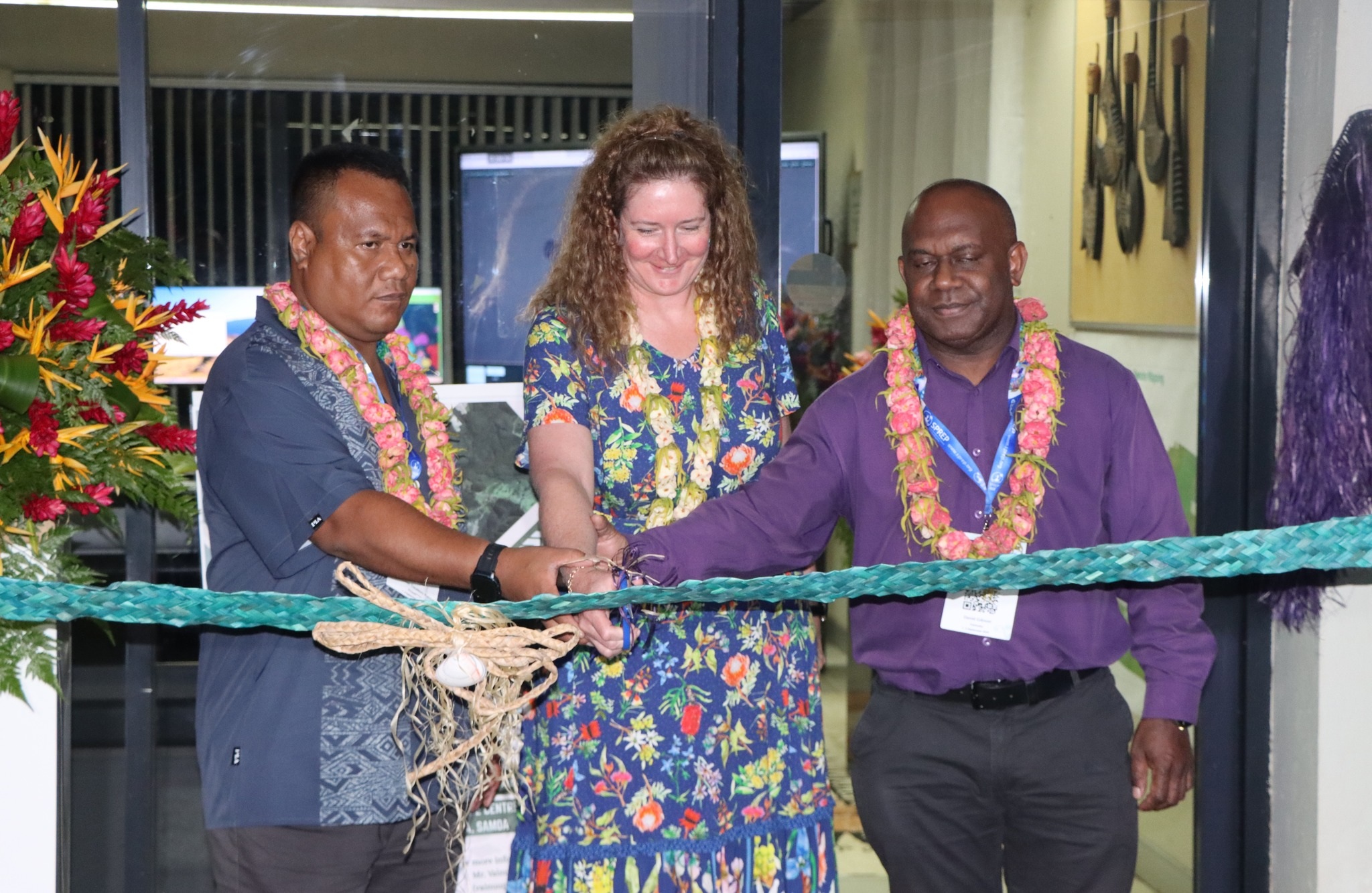
The legacy of a regional geospatial pioneer, who actively advocated for Earth Observation, environmental conservation, and climate resilience will live on to make a difference in the lives of Pacific communities, with the launch of the Emma Luke Regional Earth Observation Centre (ELEOC) in Vailima, Samoa.
Housed at the headquarters of the Secretariat of the Pacific Regional Environment Programme (SPREP), the ELEOC honours the memory of the late Emma Luke, who championed the role of Pacific countries in leading earth observation conversations and interventions for the Pacific.
In 2019, Luke’s generous support helped organise the Group on Earth Observations (GEO) Ministerial Summit in Canberra, where she facilitated the drafting of the Talanoa Statement, which recognised Traditional Knowledge (TK) in the Pacific and how earth observations could benefit regional blue economies.
The late Emma Luke left a generous donation to allow SPREP to strengthen its capacity and capabilities in earth observation and this led to the establishment of the Emma Luke Earth Observation Centre as a regional hub for geospatial collaboration and learning.
The Centre was launched on Wednesday night, as part of the Thirty second SPREP Meeting of Officials (SM32) and associated meetings taking place in Samoa, from 1-5 September.
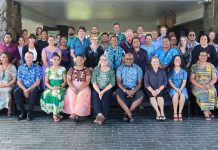
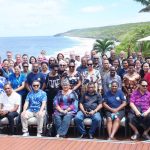
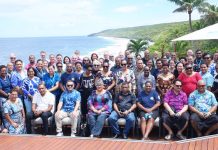
The launch was attended by more than a hundred Pacific government officials, partners, youths, civil society, academia, NGOs, and the private sector.
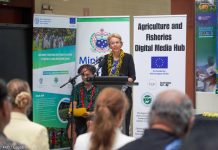
Maree Wilson, Chief of Place and Communities Division, Geoscience Australia, said the launch of the Emma Luke Earth Observation Centre at SPREP is a wonderful tribute to Emma’s enduring legacy in advancing marine and terrestrial stewardship across the Pacific.
“During her time in the Australian Government, Emma championed the use of Earth observation data to support informed environmental decision-making regionally,” she said.
“This Centre will play a vital role in strengthening Earth observation capability, enabling Pacific Island Countries and Territories to make informed environmental decisions through improved access to data.
“It also reflects Australia’s deep and personal ties with the Pacific, and our shared commitment to regional sustainability and resilience.”
SPREP Director General, Sefanaia Nawadra, paid tribute to the work of the late Emma Luke, and noted that the Emma Luke Earth Observation Centre builds on, and complements SPREP’s mandate and commitment, to support and work closely with SPREP’s Member Countries and Territories.
“We are at a critical juncture in our region’s environmental stewardship. Across our vast Blue Pacific, our communities are at the forefront of the triple planetary crisis – challenges that are as urgent, as they are interconnected – sea level rise, shifting coastlines, changing weather patterns, waste and pollution and the loss of precious island biodiversity,” Nawadra said.
“Emma’s work was never just about technology or data. It was about people, about communities across our islands who rely on the wisdom of both science and tradition to safeguard their futures. She championed the recognition of Pacific priorities by ensuring national governments led in Earth Observation dialogues and that Pacific voices were amplified and heard on the global stage.
“I would like to convey my sincere thanks and appreciation to the Emma Luke Trust for the generous financial bequest which has enabled the establishment of the Emma Luke Earth Observation Centre here at SPREP. Furthermore, I acknowledge the presence of Maree Wilson, from Geoscience Australia who is representing the Trust, and is with us this evening in marking this occasion.”
The ELEOC will act as a regional hub for innovation, knowledge exchange, capacity building, skills development and collaborative problem-solving through sharing of experiences, discussing challenges and identifying opportunities for the utilisation of earth observation data and tools across our islands.
It will also strengthen existing and explore new partnerships for enhancing regional coordination and collaboration, on open access to Earth Observation data needed by Pacific Island countries for effective environmental planning and management.
By harnessing the potential of geospatial technologies and tools, Pacific countries can transform how they understand, monitor, and protect our natural heritage. Geographic Information Systems (GIS) will also allow them to map, analyse and visualise complex environmental data providing crucial insights that empower our leaders to make informed decisions, help communities prepare for what lies ahead, and safeguard our environment for generations to come.