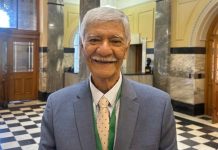

On his historic first visit to Papua New Guinea, United Nations Secretary-General António Guterres praised the nation’s climate leadership and resilience, declaring: “Your country does not contribute to climate change — on the contrary, you absorb CO₂ — but is in the first line of its dramatic impact.”
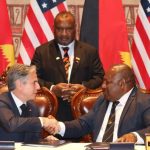
The visit marks a milestone in PNG’s 50 years of independence and democracy, and comes amid urgent calls for global financial reform, climate action, and justice for refugees. Standing alongside Prime Minister James Marape at a joint press conference in Port Moresby, UN Secretary-General António Guterres delivered a message of deep admiration for Papua New Guinea’s democratic journey, cultural resilience, and global moral leadership on climate and peace.
“This is a visit of solidarity,” Guterres said, lauding PNG’s efforts to unify its “breathtaking diversity” over five decades of independence. He acknowledged the nation’s struggles with poverty, inequality, and the impacts of the climate crisis but emphasised its example to the world, especially in the peaceful handling of the Bougainville Peace Agreement.
“The Bougainville Peace Agreement has now been in place for 24 years,” he said. “Its durability is a symbol of what can be achieved through perseverance and mutual respect.”
Guterres also praised the recently adopted National Prevention Strategy on violence, emphasising the UN’s partnership with PNG to combat gender-based violence and empower women and youth—who make up 60 percent of the population.
But the UN chief’s most impassioned remarks focused on climate justice, hailing PNG’s moral leadership on the global stage while calling out the disproportionate burden borne by nations least responsible for the crisis.
“Papua New Guinea has long led the charge for climate justice,” he said. “Your country does not contribute to climate change — on the contrary, you absorb CO₂ — but is in the first line of its dramatic impact.”
He urged developed nations to act urgently, stressing that G20 countries are responsible for 80 percent of global emissions. “The world must move faster to keep the 1.5 degrees limit alive,” Guterres warned, calling for a “drastic reduction in emissions” and meaningful climate financing — including for the Pacific Resilience Facility(PRF).
In response to a question about Australia’s ongoing responsibility for asylum seekers previously detained in PNG, Guterres was unequivocal, invoking international law and his decade-long experience as the UN High Commissioner for Refugees.
“Our position about refugees is clear. It comes from international law,” he stated. “My appeal to all countries is to respect international refugee law, which means all borders must be open for those seeking protection, and nobody should be sent back to where they might suffer persecution.”
He added: “Every country has the responsibility to grant protection and assistance to the refugees that cross their borders in search of protection.”
In response to local media inquiries about economic recovery post-COVID-19 and future support, Guterres reiterated the UN’s commitment to backing Papua New Guinea’s development agenda and advocated for sweeping changes in global finance.
He called for urgent reform of international financial institutions to give developing countries like PNG a stronger voice and better access to resources, including debt relief and enhanced investment.
“We need to multiply by three the volume of resources multilateral development banks put at the disposal of developing countries,” he said, referencing the recent Sevilla meeting. “At the same time, we need to leverage much more private finance and investment.”
Closing his remarks in Tok Pisin — “Tenk yu tumas olgeta” — the Secretary-General congratulated PNG on its golden jubilee and affirmed the UN’s continued partnership.
“For your vision, your ambition, and the lessons you teach us all,” Guterres said, “the United Nations stands in solidarity with you, now and in the future,” he said.