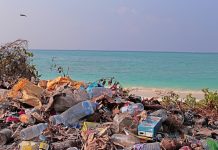



In Papua New Guinea’s East New Britain Province, where coastal communities rely on the sea for food, income, and cultural identity, the marine environment is under growing threat.
Population pressures, unsustainable harvesting, and coral destruction for lime-making are steadily eroding the reefs and biodiversity that sustain livelihoods.
Standing up to these challenges is a youth-driven, community-led group, the East New Britain (ENB) Sea Keepers. Based in Raluana Village, the grassroots organisation works with local communities to bring life back to the ocean. From restoring coral reefs to protecting nesting beaches, their mission is clear: conserve today, so there is something left for tomorrow.
For Community Liaison Officer Christine Ibos, the work is both personal and generational.
Originally from Morobe Province but now based in East New Britain, she first joined as a volunteer in 2020.
“I desired to be part of a team that conserves the marine environment, so I joined as a youth volunteer,” she said.
In 2023, her dedication was recognised when she was elected to the executive team, a role she uses to champion young people’s involvement in conservation.
“As young people, we need to protect our natural resources, especially the marine ecosystem, for the generations to come. What we do today will benefit those who come after us,” she said.
One of the ENB Sea Keepers’ most urgent missions is protecting endangered turtles. While six species are found in Papua New Guinea, four – leatherback, green, hawksbill, and Olive ridley -nest on East New Britain’s beaches.
“The Olive ridley was only discovered here last year,” Ibos noted.
Increasingly, however, turtles are being harvested for food or traded for shells.
“In East New Britain, most of the sites are used by turtles for nesting,” she explained. “The locals harvest turtles for food or sell them for earrings and necklaces. So, we go there and help the communities to protect the beaches, clean up the nesting sites, and encourage them to safeguard these areas.”
The Sea Keepers’ work extends beyond turtles to other vulnerable marine life, including dugongs, dolphins, and rays. Species protection is not just patrolling; it involves research, monitoring, and education so that communities themselves become guardians of their biodiversity.
Coral reefs, the rainforests of the sea, are also under threat as many are mined for lime used in chewing betel nut.
“People go and harvest the corals to produce lime,” Ibos said.
“That’s where the loss of biodiversity happens. So, we take the initiative to protect the marine ecosystem, coral reefs, and endangered species.”
To reverse this decline, the Sea Keepers have already established two pilot coral nurseries, planting more than 1,000 coral fragments with a 30 percent survival rate. They are also building a climate-adaptive coral nursery gene bank to strengthen reef resilience. The group supported the declaration of a locally managed marine area (LMMA), allowing communities to take ownership of marine resources while ensuring sustainable use.
Education and empowerment remain at the heart of their work. Their outreach has reached more than 3,000 students and 81 teachers across eight coastal schools, alongside awareness programs in five villages. Beyond this, awareness campaigns have extended to over 1,000 schools and coastal villages across East New Britain.
“We include young people, especially those who are not in school, in our team. They take responsibility for protecting their environment, and they want to pass that knowledge on,” Ibos said.
“By including those who are not in school, we give them the chance to lead too.”
The organisation’s impact is also academic: 36 undergraduate volunteers from the Papua New Guinea University of Natural Resources and Environment have graduated through its programs, equipped with practical conservation experience.
Equally important is the community’s response. “When we go in there and help them to protect the environment, they are so happy to be part of us and they want us to continue working with them,” Ibos said.
East New Britain is not only rich in biodiversity but also one of Papua New Guinea’s top tourist destinations.
“It’s one of the tourist spots,” Ibos said. “People love the ocean beauty here, but over the years they’ve seen biodiversity and that beauty slowly disappearing.”
Their approach blends restoration with sustainable livelihoods. Eco-tourism and alternative income opportunities are introduced to show that protecting the ocean is not just about saving species, but also about securing communities futures.
The ENB Sea Keepers’ mission is to conserve and restore East New Britain’s marine ecosystem by engaging local communities, promoting sustainable practices, and fostering education. Their vision is of a thriving marine environment where biodiversity flourishes, local livelihoods are secure, and future generations are empowered to protect their heritage.
With youth leading the way, and communities stepping up, East New Britain’s marine story still has a chance to be one of resilience and renewal.