
Dialogue partners and donor governments will not take part in the 54th Pacific Islands Forum Leaders’ Meeting in Honiara next month.
This follows a decision by the Solomon Islands Government to defer the traditional Dialogue Partners Meeting to 2026.
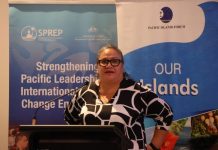
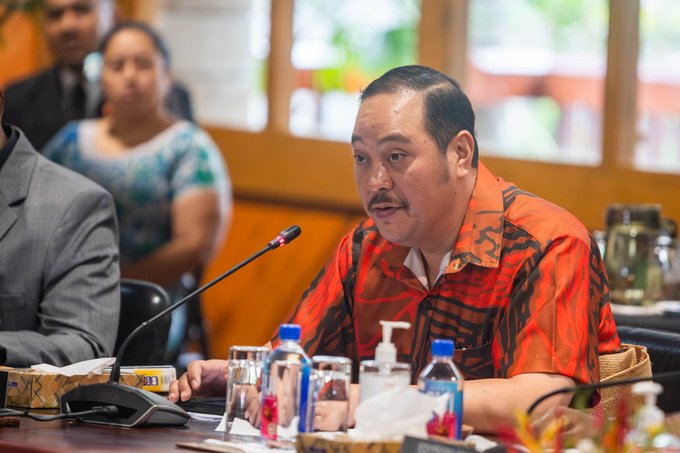
The announcement was confirmed by Crown Prince Tupoutoʻa ʻUlukalala, Tonga’s Minister for Foreign Affairs and Chair of the 2025 Forum Foreign Ministers’ Meeting (FFMM).
“This was our first opportunity as a forum family to discuss the recent decision… It was a rich and robust discussion,” the Tupoutoa’a said, describing the move as a reflection of the Pacific’s “growing maturity and solidarity.”
Dialogue partners – the United States, China, Japan, and various multilateral agencies – are usually present at the annual Forum Leaders’ Meeting.
Their exclusion this year is seen as an effort to prioritise internal regional dialogue amid growing geopolitical interest in the Pacific, according to the meeting.
Forum deputy Secretary General Esala Nayasi confirmed that Solomon Islands Prime Minister Jeremiah Manele had consulted Forum members ahead of the decision.
“The Prime Minister Manele not only consulted critical leaders but also wrote to all the leaders in relation to their proposal,” Nayasi said.
“There has now been a final agreement reached… that no dialogue partners will attend in 2025.”
“We just had the meeting concluded. We will now move to formally communicate with our dialogue partners.”
Meanwhile, China’s Ambassador to New Zealand, Wang Xiaolong, wrote on social media platform X on Thursday that Beijing was not to blame.
“To suggest that we have worked to exclude ourselves for the dialogue in the Solomons this coming September just does not stack up,” he wrote, adding that Taiwan “does not belong” at the meeting.
“To try to put Taiwan on par with partners of the Forum such as China, U.S, and others is like comparing apples and orange. It is JUST wrong,” he wrote.
The Forum’s upcoming agenda is expected to cover climate change, regional security, and the ongoing Forum reform process, as well as sensitive political issues such as West Papua and New Caledonia.