
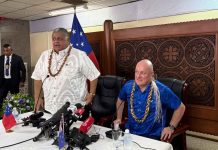
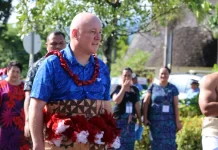
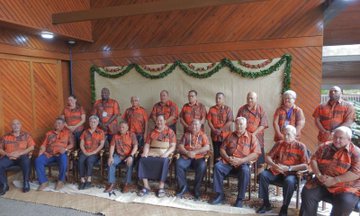
Leaders from 18 Pacific nations have gathered in Suva for this year’s Pacific Islands Forum Foreign Ministers’ Meeting (FFMM) to discuss the region’s most pressing concerns.
Forum Secretary-General Baron Waqa outlined the agenda on Thursday, with peace and security as the top priorities.
“We must safeguard our region as a zone of peace and amid evolving geopolitical dynamics,” Waqa said.
“Our discussions also put people at the centre. People-centred development means ensuring our collective efforts improve the daily lives of Pacific citizens.”
Waqa also touched on critical matters such as the legacy of nuclear challenges and the management of marine resources.
“As an existential threat to our region, climate change will be a major focus, including how we mobilise as one for the ambitious outcomes of the COP31, the first Pacific COP to be hosted by Australia, and likewise, ocean and environmental stewardship is critical.
“We will address the issues, from nuclear legacy challenges to the sustainable management of marine resources, informed by the recent dialogue on deep-sea minerals. Our discussions also put people at the centre.”
Speaking to the media before the meeting, Foreign Affairs Minister Winston Peters says he’s worried about the growing external influence within the PIF.
His concerns follow the Solomon Islands, which are hosting the PIF Leaders’ Meeting, blocking 21 dialogue partners like the United States and China from participation.
He compared the situation to the Forum’s 2021 Micronesian split, when several countries withdrew over a leadership dispute.
‘We’ve got outsiders causing the split and that’s worse,” Peters said. “So we’ve got to make sure that every outsider comes here with respect for us, of us who are inside the organisation.”
To prevent the situation from worsening, he promised to address the issue on the agenda.
“We’re offshore all around the world trying to get aid assistance for the Pacific, and out left field comes a statement.
“You might give us aid, but you can’t come to our meeting as an observer. This is not going to be helpful, so our job is to try and sort out this as fast as we can.”
Reaffirming the importance of cohesion, Peters says the Pacific Way is built on respect, unity, and discretion.
“We’ll keep our mouths shut when we should,” he said.