
As delegates enter the final stretch of the second part of the fifth session of the Intergovernmental Negotiating Committee (INC-5.2) in Geneva, Switzerland and with just four days left before the gavel falls, decisions over effective, just and fair finance to support the goals of the treaty and its implementation, has made minimal progress.
After more than two years of complex negotiations, the debate over who pays and who receives still remains unresolved.
Debates in finance are intensifying over several issues: the financial mechanism , the sources of finance and eligible recipients, the entities that will be entrusted to operate the mechanism, and the activities to be funded.
On the table, four primary options have emerged for the structure of the financial mechanism. One proposes the creation of a new, dedicated, independent multilateral fund under the treaty. Another would designate the Global Environment Facility (GEF) Trust Fund as the treaty’s financial mechanism. Two hybrid options are also suggested, one that blends both, either by running the GEF alongside a new fund with clearly defined roles, or by using the GEF as an interim mechanism before transitioning to a new independent fund.
An additional element, tagged to the GEF Trust fund option, has emerged in this final stretch, which promotes a ‘public-private partnership financing’ network, which would essentially see public finance used to catalyse private capital and philanthropic contributions.
There has been caution, however, from Pacific Small Islands Developing States (PSIDS) given experience to date in leveraging private capital and success in entering into such partnerships; given constraints in their enabling policy environments, and the success of blended and innovative finance in the region.
Given disproportionate impacts of the plastic crisis on PSIDS in particular, and devastating impacts on current and future generations, small island developing states also call for finance to be available for the remediation of legacy plastic pollution in the marine environment.
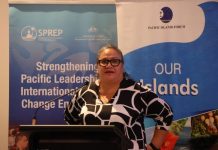
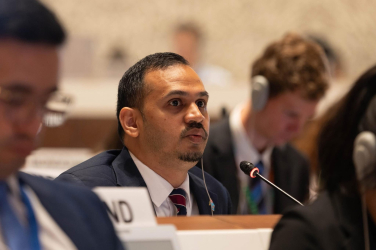
“The financial mechanism is the heartbeat of the entire treaty, and in negotiating this, it is very important to make sure it is pumping the right amount of blood to all parts of the treaty so we have enough resources to be able to tackle plastic pollution at every stage of its lifecycle, and that those resources are appropriate to our special circumstances” said Dr Sivendra Michael, Fiji’s Permanent Secretary for Environment and Climate Change, who is also the PSIDS lead on Finance.
“We don’t produce plastic, we import it,” he said. “So, it’s vital that we address the source. That means turning off the tap, controlling production globally, so we can manage what flows into our countries.”
Dr Michael says without clear, timely, accessible, and predictable financial support, even the strongest treaty provisions risk remaining empty promises.
“We know Official Development Assistance is constrained, and public funding is limited, especially given today’s geopolitical tensions,” Dr Michael noted. “While we are talking about new and additional finance, climate change and biodiversity loss already have their own dedicated funding streams; and the underlying question is really – where will this money come from?”
Developing countries, including PSIDS, have traditionally depended on financial flows from developed nations to address environmental challenges. However, accessing these funds has often been difficult with complex and burdensome reporting requirements in addition to their own capacity constraints.
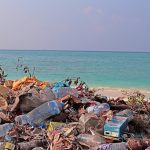
The Pacific is disproportionately affected by the global plastic pollution, contributing as little as 1.3 percent but our ocean is inundated with bulk of the world’s transboundary washed away plastics which has serious negative environmental, health, cultural and socio-economic consequences.
“We need countries that are most responsible for the plastics crisis and those with the capabilities to do so to contribute towards addressing it. Pacific SIDS, with their limited resources and infrastructure, must not be left to tackle this crisis alone,” Dr Michael said.
Talks in Geneva have entered the final 4 days and Pacific delegates are engaged in closed-door negotiations in contact groups, informal and ‘informal’ informals, that stretch late into the night. With time running out, Dr Michael has urged countries to act responsibly.
“The text has expanded exponentially, filled with numerous proposals and national positions. It’s time to move beyond this and allow multilateralism to take its course. We need countries to come together, recognise the necessary compromises, and agree on provisions that make the treaty both ambitious and balanced,” he said.
“However, if the text weakens our position, we should not be forced to accept a weak outcome,” he added.
The INC process was initiated following the adoption of UNEA Resolution 5/14 in March 2022, which called for the development of an international legally binding instrument to end plastic pollution. In the last three years, five sessions of negotiations have taken place in Uruguay, France, Kenya, Canada and South Korea.