
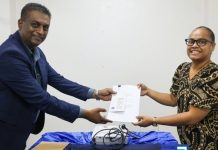

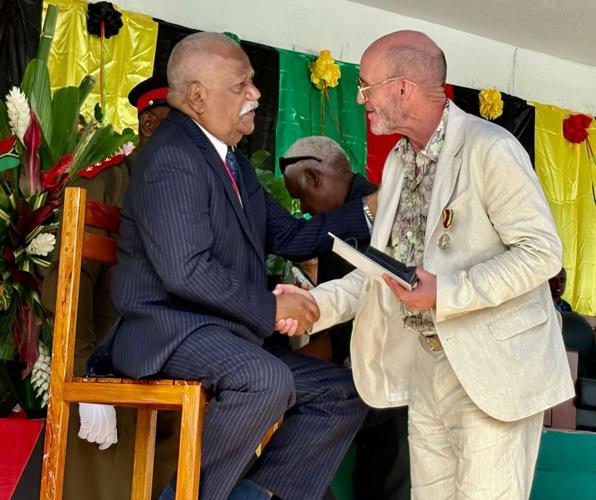
Vanuatu President Nikenike Vurobaravu has awarded the country’s highest civilian honour to international ocean conservationist Ted Waitt, coinciding with the release of Blue Prosperity Vanuatu’s findings from the most extensive coral reef study ever undertaken in Vanuatu’s waters.
The award is in recognition of his contributions to ocean management and conservation through Blue Prosperity Vanuatu — a partnership between the Government of Vanuatu and the Waitt Institute to protect and manage Vanuatu’s ocean while supporting sustainable ocean-based livelihoods.
Vanuatu Prime Minister Jotham Napat, in his remarks, said, “I acknowledge the widespread concerns about the declining health of our oceans regionally and globally. This report will bring much positive change to managing our ocean resources because of up-to-date data from this report.
“From this report, it is evident that our marine resources have been overexploited, presenting a challenge for our nation. We must carefully manage our ocean resources amid the pressures of climate change and a growing population.
“On behalf of the Vanuatu Government, I sincerely thank Waitt and the Waitt Institute for their invaluable assistance in strengthening our ocean governance, ensuring a sustainable future for generations to come,” said PM Napat.
The honour coincided with the release of the Final Science Report from the Blue Prosperity Vanuatu Coral Reef Study, which surveyed ocean health across all six provinces. In addition to the Final Science Report, the Waitt Institute also presented management recommendations based on the study’s findings.
“I commend the Government of Vanuatu for its leadership in science-based ocean management,” said Waitt upon receiving the National Award.
“With this information, Vanuatu can demonstrate the power of collaboration between science, traditional knowledge, and community stewardship to support Vanuatu’s ocean vision,” he said.
The Coral Reef Study, conducted from 01–21 September 2023, is the most extensive scientific assessment of Vanuatu’s marine ecosystems to date.
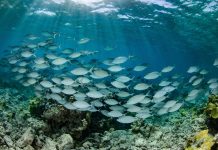
Led by the Government in partnership with the Waitt Institute, it involved close collaboration with local scientists, traditional leaders, Non-Governmental Organisations (NGOs), and international researchers, including a team from the Scripps Institution of Oceanography. The expedition gathered baseline data on reef fish populations, coral communities, marine invertebrates (such as sea cucumbers and giant clams), and water quality across the country.
Minister of Fisheries, Oceans and Maritime Affairs, Jack Norris, spoke about the findings: “Today marks a new chapter in our commitment to protect Vanuatu’s marine ecosystems. The Nationwide Coral Reef Expedition report provides essential information that will support practical action and guide policy to manage and protect our coral reefs, which are vital to ocean health.”
The underwater surveys documented the current condition of coral reefs and marine biodiversity, giving the Government the information needed to design targeted protection measures and sustainable management policies.
The report’s management recommendations combine scientific findings with existing research and traditional knowledge, building on Vanuatu’s long-standing approach to community-based marine management, including kastom marine tenure, tabu areas, and traditional governance systems.
Minister Norris added, “The Government will take immediate steps to act on the recommendations in this report,” he said. “The cost of doing nothing is too great, as our coastal communities and national food security depend on the vitality of these marine resources. This report is not just a document; it is a call to action for the present and future generations of Vanuatu.”
The findings support Vanuatu’s broader ocean conservation goals, including plans to fully protect at least 30 percent and sustainably manage 100 percent of the nation’s marine territory under the Blue Prosperity Vanuatu initiative.