


Fiji is stepping up regional climate talks after the United Nations’ top court agreed to rule on countries’ legal duties to fight climate change.
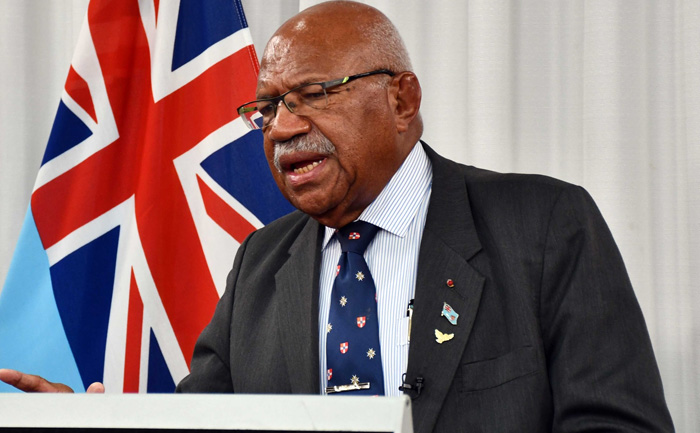
Prime Minister Sitiveni Rabuka said Fiji was now working with the UN office in Suva to break down the ruling and understand what it means for the country’s next steps.
Rabuka also states that as Chair of the Melanesian Spearhead Group (MSG), Fiji will push for climate finance and stronger unity among Pacific countries.
He said that Pacific countries must now speak with one voice and secure funding to protect people already suffering from the impacts of rising seas and stronger storms.
“Collectively decide on how we move forward in our attempt to comply with, but most importantly, how to benefit from the recommendations in the report. Fiji, alongside our Pacific Island brothers and sisters, is no stranger to cyclones.”
Rabuka said the UN court decision gives the region a chance to demand real action from major polluters.
Meanwhile, the Fiji Government has welcomed the landmark Advisory Opinion delivered by the International Court of Justice (ICJ) in Obligations of States in respect of Climate Change.
In a powerful affirmation of international law, the Court has confirmed that all States have legal obligations to take effective action to address climate change, and that failure to act with due diligence may constitute an internationally wrongful act with legal consequences, including the duty to provide full reparation.
While the Opinion is not legally binding, it provides legal clarity and will influence domestic and international legal proceedings in years to come. For countries like Fiji on the frontlines of climate impacts, this ruling provides long-awaited legal clarity and strengthens the foundation for global climate accountability. It affirms what science and morality have already made clear: no State is exempt from responsibility, and those most responsible for emissions must also be responsible for action.
The Court’s Opinion recognises that all States are required to take concrete steps, both individually and collectively, to reduce greenhouse gas emissions in line with international climate agreements and customary international law. The ICJ further emphasised that where harm from climate inaction is established, States may be held responsible and required to provide restitution or compensation.
The Opinion also makes clear that climate obligations extend to private actors, meaning States are accountable for the regulation of fossil fuel production, subsidies, and other activities within their jurisdiction that contribute to global emissions.
Fiji welcomes the Court’s acknowledgment that climate change presents an existential threat to small island developing States, and that environmental degradation directly impacts the enjoyment of fundamental human rights, including the right to life, health, food, water, and housing.
This historic legal recognition reinforces the case long made by vulnerable countries: the climate crisis is not only a scientific or economic issue, it is equally a human rights and justice issue.
In response to the ICJ’s findings, Fiji calls on all nations, especially high-emitting countries to take immediate and transformative action. This means aligning domestic policies and international commitments with the Court’s interpretation of legal obligations, scaling up emissions reductions this decade, and delivering on climate finance, adaptation support, and the new Loss and Damage Fund.
Fiji stands ready to work with like-minded partners to ensure that the full weight of this Opinion is reflected in global decision-making, including at the 2025 United Nations Climate Change Conference (COP30) in Belém, Brazil.
Fiji will continue to lead by example through its ongoing commitment to low-carbon development, renewable energy expansion, coastal resilience, and the relocation of at-risk communities. The Government remains fully engaged in advancing regional diplomacy and championing Pacific priorities across the UN climate process and other global forums.
Fiji’s Minister for Environment and Climate Change, Mosese Bulitavu stated: “This is a historic step forward. The law now speaks as clearly as the science: climate inaction has consequences. This Opinion strengthens our hand and sharpens our voice as we seek fairness, justice, and survival for our people.”
“Fiji calls on all nations to act boldly. No more excuses. No more delay. The planet is watching, and so are our children.”
The Government of Fiji reaffirms its unwavering commitment to a safe, just, and sustainable future for all. The ICJ’s Opinion is not just a legal milestone, it is a call to action that the world must now answer.