

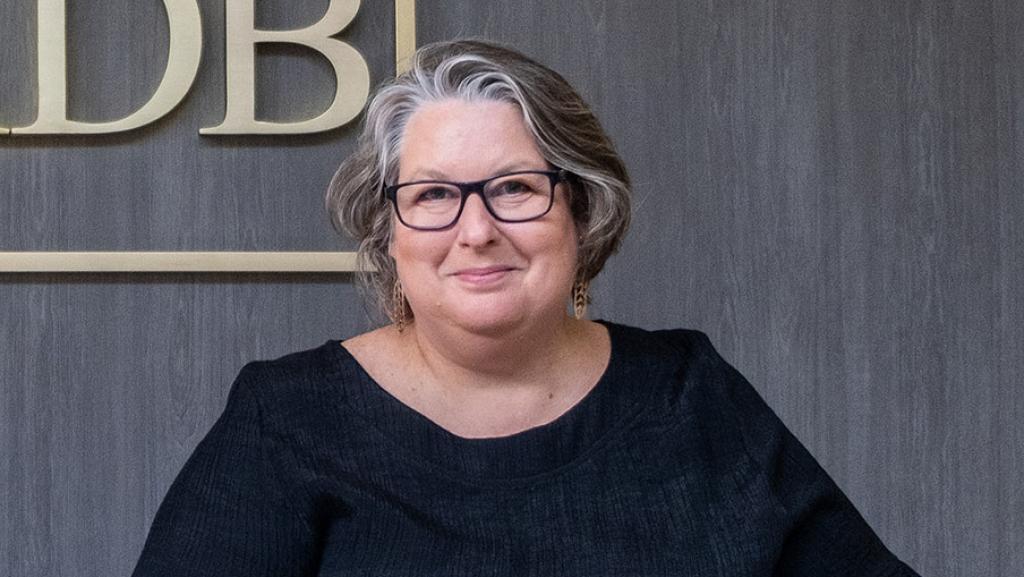
Part Two of the interview with Ms Emma Veve, the new Director General of the ADB Pacific Department conducted by PACNEWS Editor, Makereta Komai on the sidelines of the 58th ADB Governor’s Annual Meeting in Milan, Italy. Ms Veve took office in February this year and is tasked with the delivery of ADB’s vision and strategy in the Pacific
PACNEWS: What do you think about the issue of correspondent banking relationship – one of the emerging concerns from your Pacific Developing Member Countries. I first heard it last year at the Annual Meeting in meeting in Tbilisi, Georgia. How has the ADB addressed this concern since the last meeting in Georgia?
Emma Veve: After the meeting in Tbilisi, there was a big meeting in Brisbane around finance in the Pacific. And we came to an agreement that the World Bank would have a really strong focus on developing the system for countries who didn’t have access to banking could still operate a banking system with the support of the World Bank. And we agreed that we would come in behind that with a lot of technical assistance, capacity building and work with local banks and governments to try to build skills needed. One of the biggest concerns for correspondent banking is accurately identifying the customers, because you get into money laundering issues. Some Pacific countries are not World Bank members and don’t have access to World Bank grant financing. So, ADB and the government in Japan are helping as well – helping to finance what’s needed to be done in those countries.
You know, we’ve seen Westpac attempt pull back from Fiji, for example. The islands are vulnerable, particularly if there’s not homegrown banks. And really BSP is the only homegrown, it’s a Papua New Guinean bank servicing many Pacific countries now.
PACNEWS: At this meeting here in Milan, one of the four core priorities of the ADB, part of this discussion here is on food security to drive transformative change in all the member countries of the Asian Development Bank. And a lot of the allocation towards that priority has increased, and it will beUSD$26 billion for the next three years. For the Pacific, given that this is a big agenda for ADB, how will that translate into the work that you’re going to do in the Pacific, in that area?
Emma Veve: Great question. You know, a few years ago, we had no agriculture sector people working with us in the Pacific. With the recent internal restructuring, we’re now able to pull in our agricultural natural resource people to work in the Pacific. They’re very interested in building up business, and there’s a lot of interest in supporting the agriculture sector in the Pacific – both through engagement with growers, and how can we help growers be more efficient, what digital technologies are available to help farmers and markets communicate. But also, the value chain of agricultural produce. So how can you get it from a remote highland down to a market, or from that market to a port overseas, and what cold storage etc. is needed along the way. So, all of the supply chains, and how to add value to the products along the way, I think are areas that the Pacific can really benefit from. And then you become more able to substitute local agricultural products for imports, and that of course does build your resilience and your food security.
PACNEWS: What do you mean benefit from? Would that mean Pacific Developing Member Countries benefit from accessing funds that are available?
Emma Veve: But I think it’s messaging countries that this is an issue that is of concern, particularly with inflationary pressures around the world. Importing food is a lot more expensive, you need to make sure that you’re producing food in country efficiently, so it’s more affordable for the local population to buy. So, it’s messaging the countries that we’re here, we’re working in that area, and we want to do more. And it sort of starts conversations on what can we do.
PACNEWS: Are PDMCs prioritising food security?
Emma Veve: They’re probably not talking about it as food security, but some countries are certainly talking about logistics chains and how to connect farmers and markets. And countries are talking about replacing food imports, and how better to supply the hotel industry in country. The private sector is also potentially important in that. In a larger country if you’re looking at agricultural collection and processing points, they are often run by the private sector. We’ve got a number of investments across the Pacific, I’m thinking of PNG in terms of cocoa products, where we’re helping to finance that. So, it can be a mix of public and private, or a government owned facility that they bring in the private sector to operate and manage.
PACNEWS: This is a question on the local currency bond financing. I went to one of the sessions and it was announced that Fiji and Tonga have become the first Pacific countries that have given their approval to the ADB. So, what this means?
Emma Veve: We’ve been hearing this from the private sector, when we try to talk to them about borrowing from us is that we usually lend in US dollars or a couple of other big international currencies. But if someone wants to borrow in Fiji dollars or the Tongan Pa’anga, we weren’t able to help that. And that moves the foreign exchange risks, if we could, from the borrower to us. And we’re much better equipped to balance all those foreign exchange risks. We’re dealing in large amounts of money and lots of currencies. What our treasury has done is reach out to the Pacific countries who have their own currencies and say, are you interested in us being able to place a bond in your finance market? Like your Ministry for Finance do when they want to finance their budget. They’ll put a bond out, local banks, maybe the super fund will buy that bond. And then with the local currency, usually the government, but in this case ADB, would have that local currency that we could then lend to the private sector.
What we are trying to do is, with Tonga and Fiji, we’re now going through a process of all of the legal, legislative, parliamentary requirements to allow us to put a bond into your finance market.
PACNEWS: Those approvals from Fiji and Tonga have now come to ADB.
Emma Veve: Yes, so Fiji and Tonga said yes, we want to kickstart this process in the Fijian dollar and the Pa’anga. We will now go through a process, it might require parliamentary approvals and legal writing, but what we want to do is to get that ready so that we can do it.
At the same time our teams will be out talking to the private sector, knowing this is coming up and knowing we can now offer them loans in their own currency. And so, when we gather up enough of those loans, we’ll put out a bond, the amount of money we need, and then be able to make the loans.
PACNEWS: So that means the ADB will then go out and raise local currency bond that will be available for the private sector?
Emma Veve: Yes, because with governments we can already do local currency loans to governments. In places like the Cook Islands with the New Zealand dollar, we’ve been doing that for quite some years. But when it comes to the private sector, we have to have a bond to raise the currency.
PACNEWS: Is this maybe an initiative that other Pacific countries with their own currency can take on to be able to finance the private sector?
Emma Veve: Yes, we’ve asked all of them. Vanuatu, Samoa and Solomon Islands are very interested and sort of agreed to go forward fairly soon. I think Vanuatu is dealing with the aftershocks of the earthquake and what have you, so a bit further down the track. And Fiji and Tonga are the first ones to go.
PACNEWS: I was going to ask you this question that the President of the ADB was asked. What does success look like for you in your new role now, particularly when you want member countries to make the ADB their multilateral development bank of choice. For the next four years, what does success look like for you?
Emma Veve: To me, I want to see us be able to provide greater levels of financing. So, more financing into projects. But my most important metric is the success rate of those projects. I want to see us better implementing projects that really deliver what we’ve intended them to deliver from the outset. And that’s not nearly as simple as it sounds. And I think in recent years we’ve put a lot of work into making sure projects are very ready. We’ve put project readiness financing in place. It finances the detailed engineering designs of projects. It brings on oversight from engineering consulting firms to help implementation. And we want to do more in that sort of respect to implement projects more smoothly and help government.
PACNEWS: And that brings me to the issue raised by Australia, about contractors working in the region, asking the ADB to align its project procurement processes to the Pacific Islands Forum Quality Infrastructure Principles.
Emma Veve: We are big supporters of the specific quality infrastructure principles that the Pacific Islands Forum came out with a few years back. And it speaks to all the kinds of stuff we’re doing involving local firms, building local capacity, being environmentally sustainable, having good labour standards, etc. All things we want to see in our projects that governments sign with the contractors to deliver the projects. We’ve put a lot of effort both into the procurement side to bring in a larger number of bidders from more places – to ensure there’s more choices and competition created. Even if we get the best companies and leave them alone and tell off you go and do it, its not going to be the best outcome. At the same time, it’s been difficult to attract a lot of bidders to the Pacific. Bigger Pacific countries have some construction type companies of their own and they also benefit from working alongside big international firms, before going off to take projects of their own.
We are using what’s called the merit points criteria in our procurement processes all across the Pacific except in PNG where it’s a bit newer to them. Last year all of the contracts valued above 10 million are using the merit points. Companies are not only assessed on their bid price but a set of criteria – things like is the company in a joint venture with a local firm, are they building labour skills in country and other things. Typically, we are putting 70 recent weighting on the merit points and 30 percent on the finance. It’s a real effort to get good quality companies in the Pacific and ensure we have more bidders. We have some nice data that shows projects given out last year, there were more Indian companies bidding for work in the Pacific which have been unheard before. We are seeing Fijian companies bidding for work across the Pacific. Since its new here in the Pacific, we are also monitoring to ensure the balance is right and doesn’t push the prices up.
PACNEWS: Reflecting on the success rate you mentioned, what is your assessment for the past year?
Emma Veve: We look at the health of all your on-going projects – and we classify projects on whether they are on track or they need a little bit of attention or they are at risk. We are focused on bringing the risk factors down. In the last couple of years, there are three r four percent of projects that are at risk. We have 98 projects on-going on in the Pacific and only three or four percent are at risk, which is super good. If we look at the wider Asia Pacific region, the risk level is around seven or eight percent. For us it is showing that the effort that we put in on project readiness, of oversight approval, of more local people on the ground to get involved in the project is showing that things are changing and getting better. To me that is an important one. The other is the evaluation outcomes of the project when its finished – that is showing that its slower. The level of improvement is lagging because we are still finishing projects that might have been designed seven to ten years ago that didn’t benefit from what the new requirements for projects now. But in terms of specific results, evaluation results have been improving but we are still a long way to go. We certainly want to see the health of project flow into the health of the outcomes of the project.
Our portfolio is US$3.9 billion. Last year was a great year for us, we approved US$1.4 billion new financing for the Pacific and that includes co-financing that our partners brought into our projects. So, 2024 has been our strongest year ever. Of that US$1.4 billion, USD$450 million was for climate financing, which is a third of what we approved last year.
PACNEWS: The Asian Development Fund (ADF14) replenishment last year of USD$5 billion – will mean that Pacific Developing Member Countries will get an even greater share of the funds allocated to them compared to ADF13. Countries like Cook Islands are asking when will they get their allocation from ADF14? How is the allocation calculated?
Emma Veve: We group our member countries into three groups – A, B and C. In the Pacific we don’t have any group C countries, they are the ones that access ordinary capital resources only, which is more expensive financing. Fiji used to be in that group and they were moved to group B a couple of years ago because we argued that they really didn’t meet the criteria for that group. Our group B countries can access our concessional funds so Fiji and the Cook Islands are in that group along with Palau and some others. Our group A countries are the ones that are getting most direct benefits from the ADF. That includes Tuvalu, Kiribati, Samoa, Tonga, Marshall Islands, Solomon Islands, Federated States of Micronesia and Vanuatu. Depending on the country’s management of debt, we give them access to grant resources. Kiribati and Tuvalu only get grant resources because they not in a position to take on debt. Some countries get from USD$40 million up to over USD$100 million. Some group A countries get some grant money and some concessional money and some of them get just concessional lending resources. The intent is to have all that money signed off in projects by the end of the four years.