



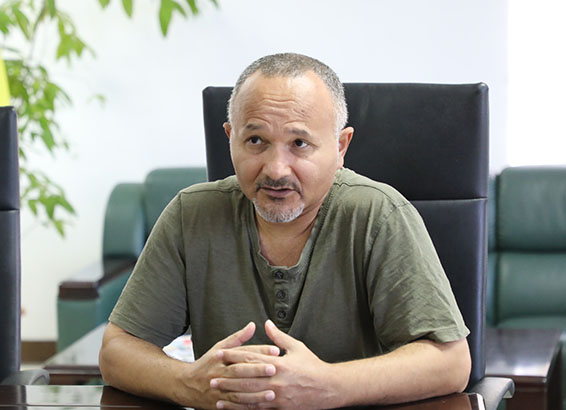
Solomon Islands Leader of Opposition Matthew Wale has described the Government’s 100-day policy programme as ‘sorrowful,’ lacking new ideas or strategic vision.
Speaking in Parliament on Monday, Wale said 99 percent of what was in the Government of National Unity (GNUT) 100-day programme merely were inherited from DCGA.
The Opposition Leader said, the excessively high number of policies announced in the 100-day programme betrayed the fact that it merely included everything that ministries were already doing under the previous government that might be delivered in the 100 days of the GNUT.
He said it did not provide a sense of the coalition government’s reform agenda and priorities.
“When everything the ministries are doing are included in a 100-day programme, it implies that government sees everything as having equal importance. In turn, this betrays a sense of a lack of direction, a lack of strategic priorities, and ultimately a lack of a strategic vision,” Wale said.
The Opposition Leader said it’s important to note that once policy has been accepted as government policy, all new or incoming governments are bound to implement it.
Wale said if the new government rejects a policy or decides to change it, it must be stated clearly.
However, he said the expectation is that incoming governments implement policy inherited from previous governments.
“Such inherited policies need not feature in the incoming government’s policy document – this does not mean a rejection of it, simply a recognition that it is already government policy,” he said.
The Opposition Leader added a 100 days policy for a new government ought to focus on just a few critical low-hanging deliverable policy outcomes that demonstrate the government’s reform agenda and priorities.
On paper, Wale said, the distribution of policy outcomes in the 100- day programme appear balanced and in accordance with GNUT’s overall goal of economic transformation.
“Of its 177 policy lines, 37 percent were on governance, seeking to repair chronic legislative gaps that block economic progress. 36 percent pursued economic targets. 17 percent targeted investments in human-capital development through health, education, and skills. The remaining 10 percent addressed national unity. Although the distribution of policy emphasis in the 100-day programme may give the appearance of balance, what is even more important is delivery and outcomes,” he said.
Wale said the fundamental sector’s 50 policies pledged to improve transparency in public finance management, enhancing legislative frameworks to reduce corruption, and institutional capacity building for effective public administration.